
What is Hydrolyzed Sponge (Sponge Microneedle)
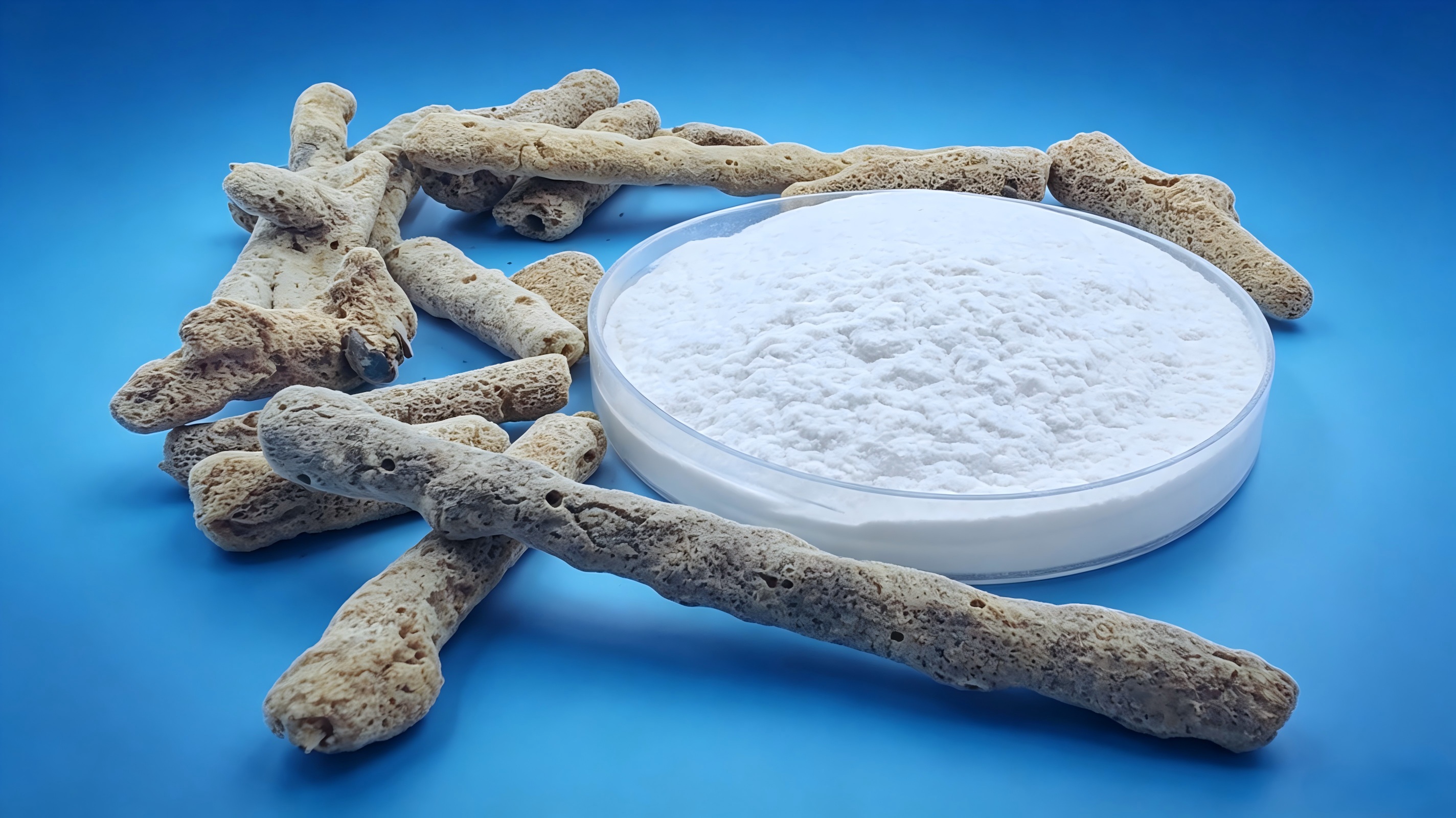
Hydrolyzed Sponge, with INCI name Hydrolyzed Sponge, is commonly referred to as sponge microneedle or sponge spicule in the industry. Its serial number in the inventory is 06306, making it a compliant existing cosmetic raw material in China. This raw material is extracted from freshwater or siliceous sponges, and undergoes hydrolysis, purification and impurity removal processes to retain the natural siliceous spicule structure of sponges. Its main component is silica, and it appears as white to off-white fine powder. Under a microscope, it presents micron-scale needle-shaped crystals, with spicule lengths mostly ranging from 150 μm to 320 μm and a diameter of about ten micrometers.
Important Distinction: Cosmetic-grade hydrolyzed sponge is not equivalent to invasive medical metal microneedles. Under the cosmetic category, this raw material is only allowed to stay on the surface of the stratum corneum, and products are prohibited from claiming medical effects such as puncturing the skin or invading the dermis.
Core Skin Care Mechanism of Hydrolyzed Sponge
Hydrolyzed sponge is a physical keratin-conditioning raw material that does not rely on chemical exfoliants to take effect. It has three core action logics:
Gently loosen aged keratin
During the application and massage process, the microscopic needle-shaped crystals act on the surface of the stratum corneum, loosening and adsorbing aged keratin, pore oil and dirt, improving roughness, closed comedones and enlarged pores, so as to achieve physical keratin conditioning. It does not rely on acids to corrode keratin, which is different from the chemical skin-renewal systems of fruit acids and salicylic acid.Assist in improving the transdermal efficiency of active substances
After the stratum corneum is physically conditioned, the surface barrier is temporarily opened, which can help the repairing and brightening active substances compounded in the formula penetrate the stratum corneum better, amplifying the functional effects of other active ingredients.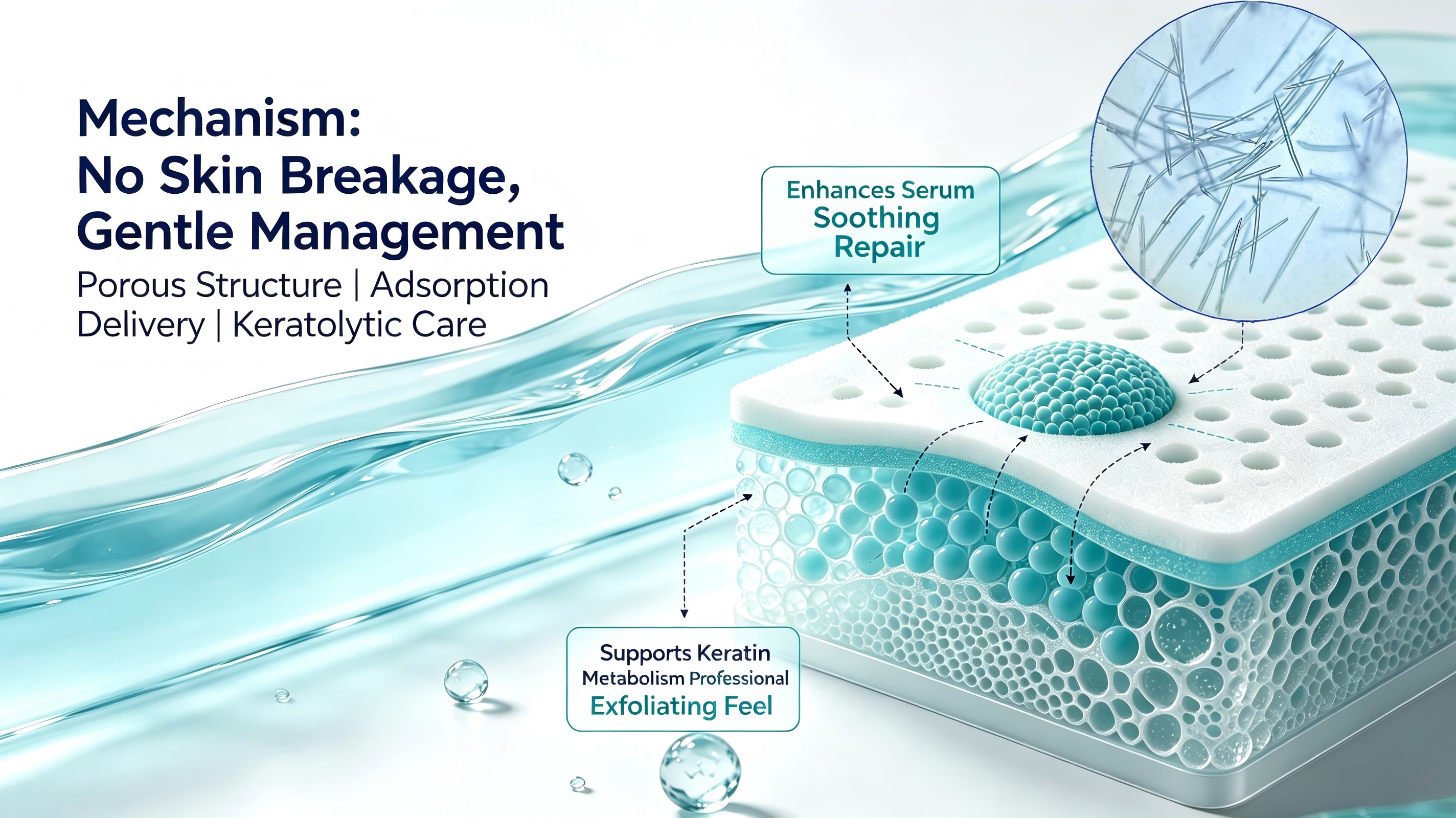
Trigger the skin's self-repair response
The spicules produce mild physical stimulation to the epidermis, triggering the skin's own repair signal and improving rough and dull skin texture. Note: This effect is limited to the epidermal keratin level. Cosmetic products are not allowed to publicize medical-related effects such as stimulating collagen regeneration and anti-wrinkle treatment.
Note: Temporary stinging and redness during use are normal physical contact sensations. Skin with damaged barriers, broken skin or in an inflammatory period is not recommended to use products containing this raw material.
Suitable Cosmetic Product Types
As a powder raw material, hydrolyzed sponge is compatible with leave-on and rinse-off formulations. The mainstream product forms in the market are as follows:
Beauty salon powder-liquid combination kit (mainstream in the market)
The powder is packaged separately and mixed with the essence before use, which is used for keratin management, pore refinement and dullness improvement care in beauty salons.Smear-type skin-renewal mask, gel mask
The powder is dispersed in a gel matrix, used as a home-use keratin-conditioning mask to improve roughness and closed comedones.Skin-renewal essence, conditioning lotion and cream
Leave-on essences and creams are suitable for mild long-term keratin management; the formula needs to solve the problem of powder sedimentation.Cleansing and scrubbing rinse-off products
Wash-off conditioning masks and scrubs have short-term skin contact, with relatively lower risks.Emerging direction: scalp conditioning products
It can be used for scalp keratin dredging to improve scalp oil clogging, which belongs to a growing track.
Not recommended for development: Products for the eye area, products in contact with mucous membranes; minimalist skin care products focused on barrier repair are not recommended to add hydrolyzed sponge.
Addition Amount and Precautions for Formulation Compatibility
4.1 Industry Reference Addition Range
Hydrolyzed sponge no longer has an official limit marked in the Inventory of Existing Cosmetic Ingredients. The historical usage data of commercially available products in the market can be used as a reference for formulation, and the final value shall be subject to the cosmetic safety assessment report of the enterprise, as required by the National Medical Products Administration:
Rinse-off products: 1-5%, with short-term contact, focusing on physical cleaning and conditioning;
Leave-on daily conditioning: 2-8%, for home-use essences and creams;
Powder phase in beauty salon kits: 8-16%, mixed before use, and not directly used as finished products for long-term leave-on application.
Higher addition does not necessarily mean better effects. High addition will increase stinging sensation, powder sedimentation difficulties, and also increase the risk of barrier irritation. It is necessary to complete accelerated stability tests and human safety tests in combination with the particle size grade of the powder.
4.2 Formulation Compatibility and Mass Production Pain Points
Powder sedimentation (the most common pain point)
Hydrolyzed sponge is an inorganic siliceous powder with high density, which is easy to sediment in the water phase system.
Solutions: Select a suitable suspension system, such as modified cellulose and cross-linked acrylate thickening systems; avoid using low-viscosity water. If necessary, it can be made into a powder-liquid two-phase package and mixed before use, which is a mature industrial solution.Recommended compound combinations
✅ Hydrolyzed Sponge + Panthenol + Sodium Hyaluronate: Replenish water and repair while conditioning keratin, buffering physical irritation;
✅ Hydrolyzed Sponge + Centella Asiatica Extract: Soothe and repair, reducing the risk of redness after use.Compound with caution, and it is recommended to stagger usage scenarios
❌ It is not recommended to compound high-concentration fruit acids, salicylic acid and high-concentration retinol in the same formula. The combination of physical keratin disturbance and chemical exfoliation will greatly amplify the risk of barrier damage. If they need to coexist, it is necessary to reduce the concentration of both sides and complete a full safety assessment and tolerance test.Process key points
Feed the powder under low-speed stirring and dispersion, avoid high-speed shearing to break the spicule structure; pay attention to the feeding sequence of raw materials: build the suspension matrix first, and then add the hydrolyzed sponge powder; strictly control microbial contamination in the production process.
5. Regulatory Requirements for the Application of Raw Materials in Cosmetics
Raw material identity: Hydrolyzed sponge is included in the Inventory of Existing Cosmetic Ingredients (2021 Edition), which is a compliant cosmetic raw material and not a new raw material, and can be used for normal record-filing.
Promotion compliance
Allowed claims: Keratin conditioning, roughness improvement, pore refinement, dullness improvement;
Product boundary red lines (top priority): When using hydrolyzed sponge, cosmetics are strictly prohibited from using medical descriptions such as puncturing the skin, invading the dermis, microneedle skin piercing, medical microneedles, minimally invasive introduction, scar repair, and stimulating collagen regeneration. Regulatory caliber: If a product claims to achieve effects by puncturing the skin with raw materials, it exceeds the definition of cosmetics and will be regulated as a medical device.Prohibited scenarios: It is not recommended for children's cosmetics for children under 3 years old; it is prohibited for mucous membrane products; it is not suitable for broken skin and wounds.
Conclusion
Hydrolyzed sponge (sponge microneedle) has become a popular raw material in the beauty salon and home skin-renewal track due to its unique physical keratin conditioning mechanism. However, there are three major difficulties in formula implementation: powder suspension, sensory control and compliant claims. When developing products, brands need to balance the relationship between addition amount, sensory experience and risks, strictly abide by the cosmetic claim red lines, and complete safety assessments and stability tests.
Our company can supply high-purity cosmetic-grade hydrolyzed sponge raw materials with controllable powder particle size, low broken-needle rate and complete qualifications. We can provide sample testing, technical support for formula suspension solutions, and support small and large batch supply, helping brands develop new keratin-conditioning products in compliance with regulations.
References
[1] 国家药品监督管理局。已使用化妆品原料目录(2021 版)[EB/OL]. http://www.nmpa.gov.cn