
Tetrahydro‑methylpyrimidine Carboxylic Acid96702‑03‑3
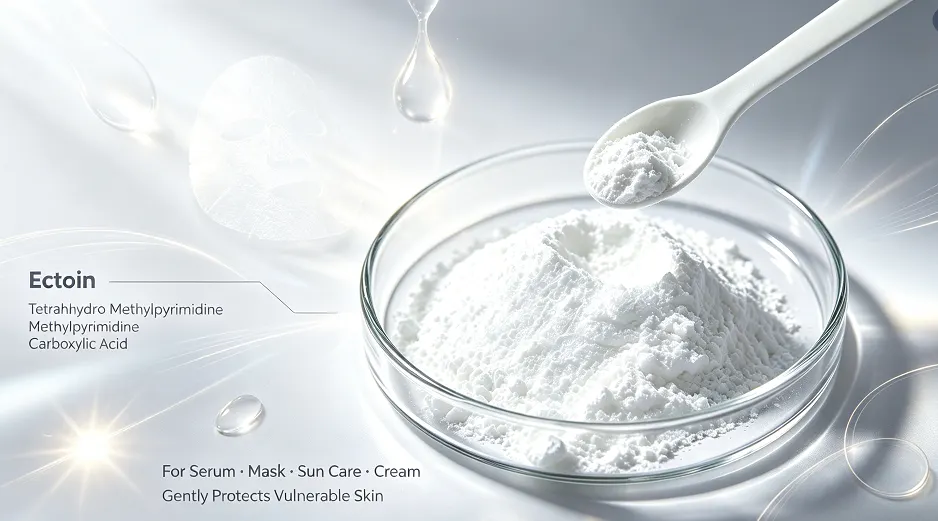
Ectoin is widely applied in skin protection care and skincare formulation R&D. Please confirm purity, content specification and packaging upon inquiry. Xi'an Wanlü provides samples for testing, full set of technical documents including COA, MSDS and TDS, together with patent support, and guarantees stable bulk supply.
Overview
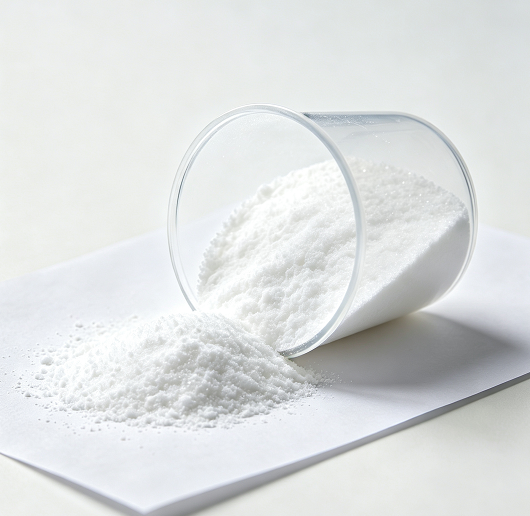
What is Ectoin?
An extremolyte fermented by halophilic bacteria, water‑soluble cosmetic raw‑material, fine bright‑white powder. It forms a hydrating protective shell outside skin cells and stabilizes cell‑membrane protein structure。
Solubility of Ectoin?
Freely soluble in water, glycerin and propylene glycol; insoluble in oils.
Recommended dosage of Ectoin?
0.5‑2% for leave‑on cosmetic products, 0.1‑1% for rinse‑off products.
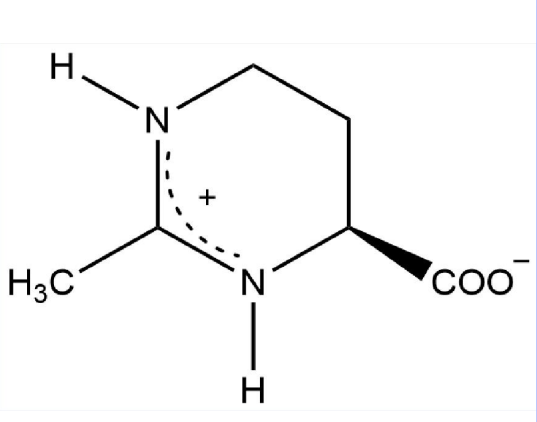
Figure 1. Molecular Structure of Ectoin
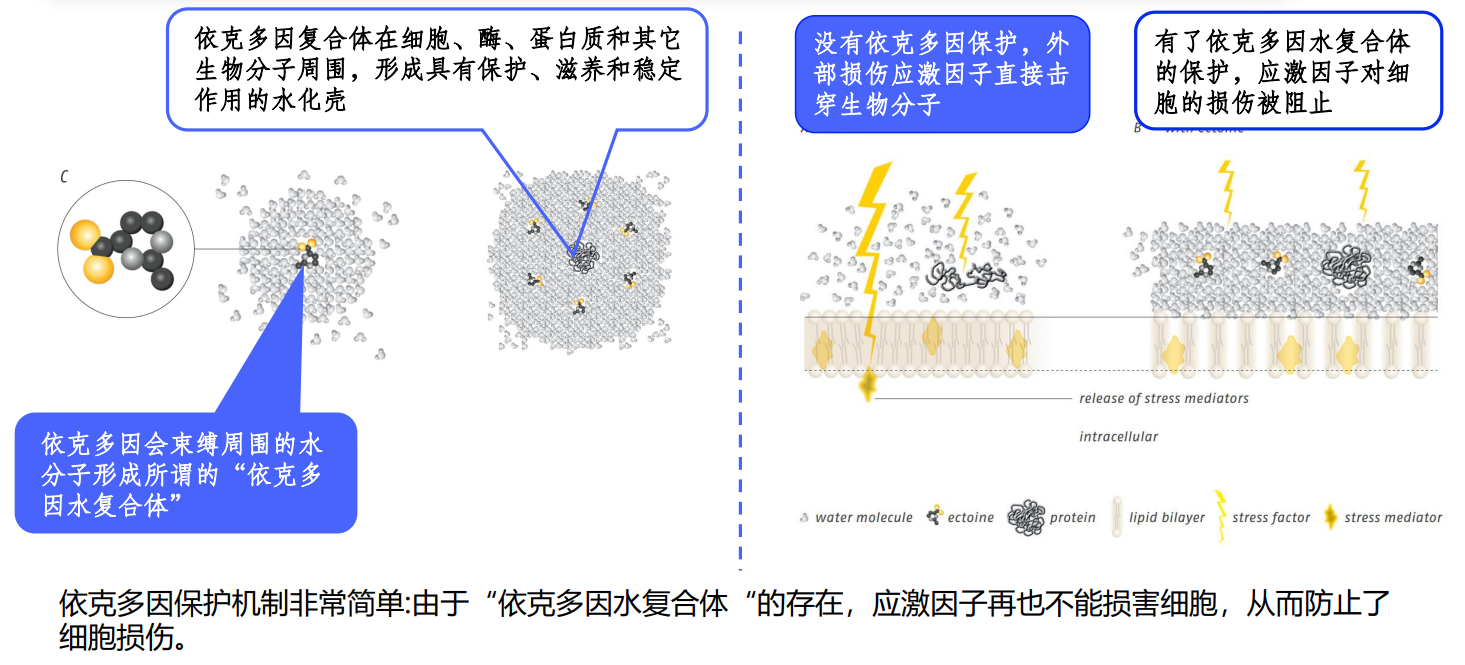
Figure 2. Mechanism of Action of Ectoin
Key Parameters
Applications
Barrier Repair & Soothing Care
Repairs impaired skin barrier, relieves redness, stinging and sensitivity, applied in serums, creams and masks for sensitive‑skin.
Photoprotection & After‑Sun Recovery
Shields skin cells from UV, blue‑light and environmental stress damage, suitable for sunscreen and after‑sun products.
Post‑procedure & Multi‑scenario Care
Reduces irritation and accelerates recovery after microneedling, laser and peeling treatments; also used for eye, scalp and mild body‑care.
Product FAQ
What is Ectoin?
Ectoin (Tetrahydro‑methylpyrimidinecarboxylic acid, CAS 96702‑03‑3), a cyclic amino‑acid derivative from halophilic bacteria fermentation. Water‑soluble white crystalline powder, for skin moisturizing, soothing and cell‑protection, widely used in cosmetic and biological dressing formulations.
What is the recommended dosage of Ectoin in cosmetics?
For leave‑on products such as serums, creams and masks, the typical dosage is 0.5‑2.0%. It can be increased to 2‑3% for after‑sun and post‑procedure repairing formulas. For rinse‑off products, dosage is 0.3‑0.5%. Full safety assessment is required for formulas above 3%. Pay attention to solubility in low‑temperature formulations to prevent crystal precipitation.
What is the pH tolerance range for Ectoin formulations?
Stable pH range: 4.0‑8.0. Long‑term exposure under strong conditions of pH<4 or pH>8 will impair the stability of its cyclic molecular structure. The final pH of the formulation is recommended to be weakly acidic‑neutral to preserve raw‑material activity.
Storage conditions and shelf‑life of Ectoin raw material?
Seal powder raw material and store in cool, dry and dark place. Solid shelf‑life: 24 months. Aqueous solution shall be freshly prepared. Keep aqueous solution away from light and avoid long‑term high‑temperature storage to prevent impurity increase.