
Hydroxyethylpiperazine Ethanesulfonic AcidHepes
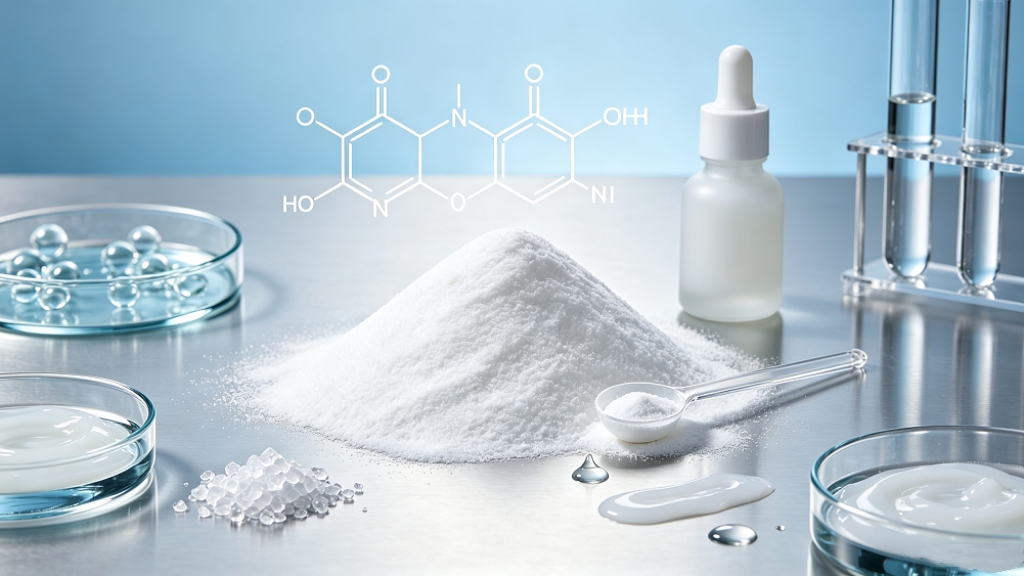
HEPES applies to R&D of biological buffers, cell culture and daily chemical formulation substrates. Confirm grade, purity and packaging before purchase. Xi'an Wanlv provides specification discussion, batch documents and sample support.
Overview
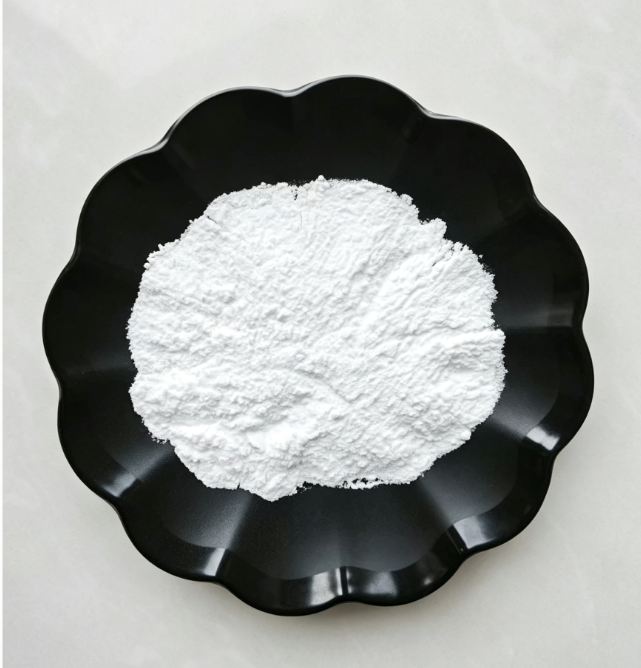
What is 4‑(2‑Hydroxyethyl)‑1‑piperazineethanesulfonic acid (HEPES)?HEPES (4‑(2‑Hydroxyethyl)‑1‑piperazineethanesulfonic acid) is a high‑quality zwitterionic biological buffering raw material, included in the *Inventory of Existing Cosmetic Ingredients (2021 Edition)*. It is safe and compliant, compatible with various functional skincare systems. It appears as white crystalline powder with excellent water‑solubility. Featuring a buffering range matching skin physiological environment, it maintains formula pH over long term and mitigates pH drift during storage and application to improve formula stability. By stabilizing formula pH environment, it helps reduce degradation of sensitive actives including collagen, peptides and vitamins. It is widely applied in premium functional skincare products such as repairing serums, moisturizing creams & lotions, facial masks and toners. It can also be used for dressing‑related formula development as an excellent pH‑stabilizing auxiliary agent.
What is the effective buffering pH range of HEPES?At 25℃, its effective buffering pH range is 6.8‑8.2 with pKa≈7.48, close to the physiological pH of human skin. Different from conventional acid‑base regulators, it alleviates pH drift of finished products during storage and helps preserve active ingredients such as collagen, peptides and VC.
Will HEPES chelate metal ions?As a Good’s zwitterionic buffer, HEPES barely chelates metal ions such as calcium and magnesium. It hardly forms complex precipitates with metal‑containing actives in formulations, making it highly suitable for recombinant collagen and peptide‑based formula systems.
Key Parameters
Applications
Cosmetic Applications
pH‑stabilizing buffering agent: Acts as a pH‑stabilizing buffering agent to help maintain the pH of skincare formulations and mitigate pH fluctuation. Suitable for serums, toners, creams & lotions, facial masks and other cosmetic formulations; compatible with complex systems containing recombinant collagen, peptides and other active substances.
Cell and Tissue Culture
1. Culture medium buffer: Working concentration 10‑25 mM, compensates for deficiencies in bicarbonate‑based buffering systems. Prevents sharp pH rise and preserves cell viability when media is handled outside CO₂ incubators for microscopy and live‑cell imaging. 2. Used for ex‑vivo organ/tissue incubation, primary‑cell culture and suspension‑cell culture; auxiliary buffer for cell cryopreservation solutions. 3. Transfection systems: Lipid‑mediated transfection, protein transfection, CRISPR delivery for improved transfection efficiency.
Molecular Biology & Biochemical Experiments
1. Enzymatic reaction buffer: For restriction endonucleases, T4 RNA ligase, protein kinases and enzyme‑kinetics assays; exhibits far lower interference than Tris. 2. Protein‑related applications: Protein purification, immunoprecipitation, protein crystallization, Western blot, electrophoresis and isoelectric focusing. 3. Nucleic‑acid‑related applications: RNA extraction, Northern blotting, LAMP isothermal amplification; buffer component in nucleic‑acid detection kits. 4. Buffer system for cell lysis to maintain pH stability during lysis.
In‑vitro Diagnostic (IVD) Reagents
1. Buffering matrix for biochemical assays, immunoturbidimetry and latex‑enhanced assay kits (HEPES is widely adopted in R1 reagents for analytes such as lipoprotein‑a and tumor markers). 2. Buffering solution for colloidal‑gold and chemiluminescent reagents; buffering medium for microsphere and nanoparticle preparation.
Biopharmaceuticals & Formulation Field
1. Buffer for liposomes, nanomedicines and protein‑drug formulations; pH maintenance for antibody and recombinant‑protein preparations. 2. Process‑phase buffer for cell‑therapy products and organoid manufacturing.
Other Applications
1. Fixation buffer for electron‑microscopy samples with low interference on metal substrates. 2. pH stabilization for microalgae and aquatic‑organism culture media.
Product FAQ
What is HEPES?
HEPES is the abbreviation for 4‑(2‑Hydroxyethyl)‑1‑piperazineethanesulfonic acid. It is a Good’s zwitterionic buffering agent listed in the *Inventory of Existing Cosmetic Ingredients (2021 Edition)*, and widely applied in cosmetics, cell culture, IVD reagents and biopharmaceutical industries.
What is the buffering pH range of HEPES?
At 25 °C, its effective buffering pH range is 6.8‑8.2 with pKa≈7.48. Its buffering range is close to physiological pH conditions.
Will HEPES chelate metal ions?
HEPES barely chelates calcium, magnesium and other metal ions and hardly forms complex precipitates. It is well‑suited for formulations with recombinant collagen and peptides.
What is the recommended dosage of HEPES in cosmetics?
The recommended dosage in cosmetic formulations is 0.5‑2.0 %. It fits neutral‑weakly alkaline systems of pH 6.8‑8.2 and is not suitable for strongly‑acidic formulations.
Besides cosmetics, what other fields can HEPES be used in?
It can be used in cell and tissue culture, molecular & biochemical experiments, in‑vitro diagnostic (IVD) reagents, biopharmaceutical formulation processes, microalgae culture media and more.