
Hexapeptide-9Collaxyl
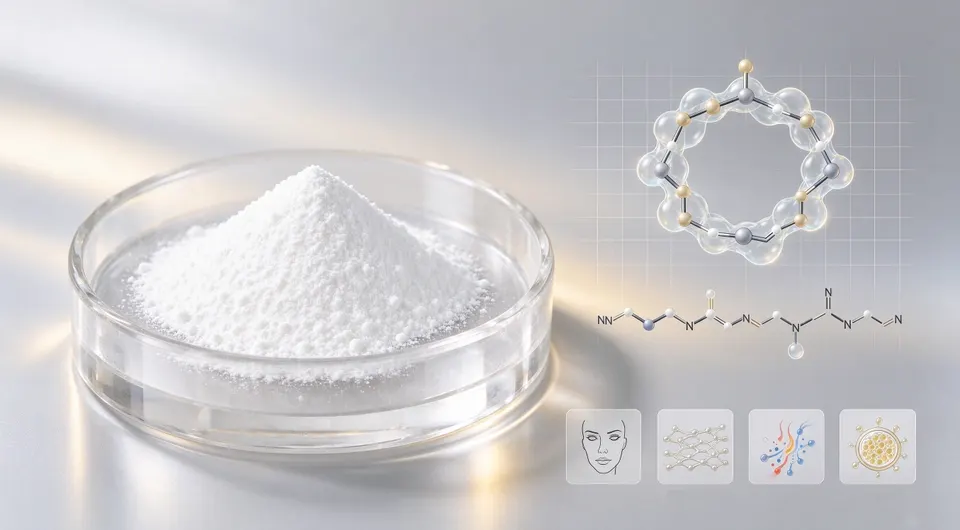
Hexapeptide-9 (Collaxyl) is a biomimetic peptide for cosmetics. In vitro tests show it can act on fibroblasts, participate in collagen-related signaling pathways, and help maintain the homeostasis of the epidermal-dermal junction. Xi'an Wanlv can provide COA and other relevant documents.
Overview
What is Hexapeptide-9?
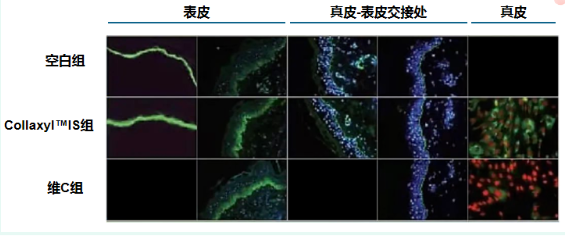
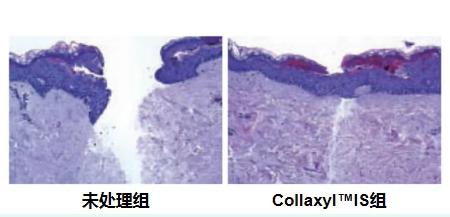
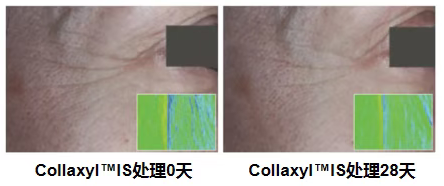
Hexapeptide-9 (Collaxyl) is a water-soluble signaling peptide with amino acid sequence GPQGPQ. In in vitro cell models, it can act on fibroblasts and participate in pathways related to the synthesis of type Ⅰ, Ⅲ, Ⅳ collagens and laminin. In vitro studies indicate that it helps stabilize the dermal-epidermal junction (DEJ). It can promote epidermal cell differentiation under in vitro conditions. This ingredient is listed in the Inventory of Existing Cosmetic Ingredients of China (2021 Edition) and can be used as a raw material for cosmetic formulation R&D.
Key Parameters
Applications
Application in Skincare
1. Anti-aging related formulations (serums, face creams, eye creams, neck creams): In vitro studies show it participates in the synthesis pathways of collagen and elastic fibers, applicable for formulation development targeting skin aging; recommended dosage of neat raw material: 0.001–0.1%. 2. Barrier-supporting formulations (serums, facial masks, ampoules): It can promote epidermal cell differentiation in in vitro models, suitable for formulation R&D related to skin barrier, compatible with various aqueous formulations. 3. Compounding reference: It can be formulated with Vitamin C derivatives, hyaluronic acid and ceramides for formulation evaluation, to explore synergistic potential in moisturization, antioxidation and skin homeostasis maintenance.
Product FAQ
What is Hexapeptide‑9? What are its INCI and CAS numbers?
Hexapeptide‑9 (trade name: Collaxyl) is a synthetic signaling hexapeptide. Its amino acid sequence: Gly‑Pro‑Gln‑Gly‑Pro‑Gln (GPQGPQ); CAS: 1228371‑11‑6. Listed in the Inventory of Existing Cosmetic Ingredients of China (2021 Edition), it is a compliant cosmetic raw material. Appearance: white to off‑white powder.
What is the mechanism of action of Hexapeptide‑9?
It is a collagen‑signaling peptide. In in vitro cell models, it mimics signals of collagen fragments, acts on fibroblasts and participates in pathways related to the synthesis of type I and III collagens. It targets the dermal‑epidermal junction (DEJ), helps maintain dermal matrix homeostasis, and in vitro tests show it participates in epidermal cell differentiation.
Which raw materials can be combined with Hexapeptide‑9? Which materials require caution?
✅ Recommended combinations: Sodium Hyaluronate, Panthenol, Ceramides, Ergothioneine, palmitoyl peptides and other active ingredients. ⚠️ Caution: Systems with high concentration of strong acids or strongly oxidative raw materials may reduce peptide activity. Small‑scale stability tests are recommended prior to formulation.
What is the difference between Hexapeptide‑9 and Acetyl Hexapeptide‑8 (Argireline)?
They have completely different mechanisms of action. Acetyl Hexapeptide‑8 is a neuromodulating peptide, acting on neurotransmitter release pathways in in vitro models. Hexapeptide‑9 is a collagen‑signaling peptide; in in vitro cell tests, it participates in collagen synthesis pathways and can be used for formulation R&D evaluation targeting dermal matrix.