
PDLLA(Poly‑D,L‑Lactic Acid)
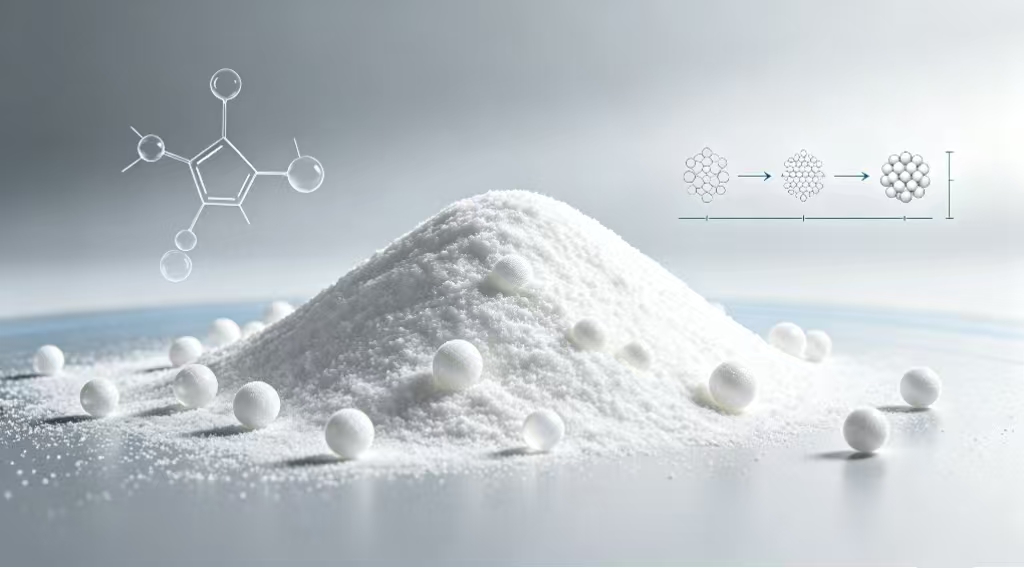
PDLLA poly(D,L-lactic acid) microspheres are commonly applied in R&D of substrates for soft tissue augmentation and regenerative repair. Confirm end application, microsphere particle size, spherical morphology and packaging specifications prior to purchase. Xi'an Wanlv offers customized supply, full batch documents and sample inquiry support.
Overview
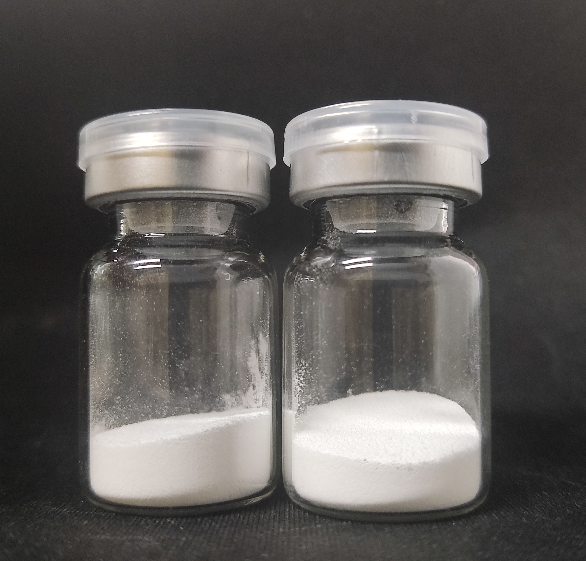
What is PDLLA?Poly (D,L‑lactide) Microspheres, also known as racemic polylactide microspheres, are synthesized by random copolymerization of equal amounts of D‑lactic acid and L‑lactic acid. It is a polymer microsphere raw material for medical applications with biodegradable properties (degradation behavior is affected by molecular weight, particle size and downstream processing conditions). Porous sponge‑like spherical particles are produced via emulsion‑solvent evaporation process, with customizable particle sizes. The material features a structure conducive to biocompatibility and theoretically low immunogenic risk. Final performance depends on the formulation and processing of downstream finished products. It is a commonly‑used substrate for the R&D of aesthetic medical devices for soft‑tissue‑related applications, drug‑delivery carriers and tissue‑engineering scaffolds. Important Notice: This product is only an upstream raw material. Downstream end‑products shall complete medical device registration in accordance with NMPA regulations before clinical application.
Key Parameters
Applications
Drug‑Delivery Carrier
Substrate for injectable microspheres and implantable devices. It can encapsulate peptides, proteins and small‑molecule drugs for formulation development of controlled‑release and local‑delivery preparations.
Tissue Engineering & Medical Implant Substrate
R&D substrate for porous scaffolds, applicable to bone, cartilage and skin tissue‑engineered scaffolds, and usable as cell‑carrier material. Upstream R&D raw material for absorbable medical membranes, anti‑adhesion films, low‑strength absorbable fixation devices, ophthalmic implants and dental tissue‑related consumables.
R&D Raw Material for Aesthetic Medical Devices
Upstream raw material for injectable soft‑tissue‑related medical device R&D. Can be compounded with gel excipients for formulation development of absorbable injectable medical devices.
Other Medical R&D Directions
Formulation development for absorbable surgical supplies and hemostatic medical devices; upstream raw material for biodegradable 3D‑bioprinting consumables.
Product FAQ
What is PDLLA?
PDLLA, chemically named poly(D,L-lactic acid), is synthesized by random copolymerization of D-lactic acid and L-lactic acid monomers. It is an amorphous, non-crystalline polylactic acid polymer raw material. Unlike crystalline PLLA, PDLLA has no regular crystalline phase inside, resulting in a relatively uniform hydrolytic degradation process with less risk of crystalline residue. The product's viscosity-average molecular weight and particle size can be customized on demand, and it is mainly used in R&D scenarios such as drug-delivery microspheres, tissue-engineering scaffolds and soft-tissue-related medical devices. This product is only an upstream R&D raw material and cannot be used directly on the human body. Downstream end-products shall complete medical device registration in accordance with NMPA regulations and full GB/T 16886 biological evaluation before clinical application.
What is the difference between PDLLA and PLLA?
PDLLA is an amorphous, non-crystalline polylactic acid obtained by random copolymerization of D- and L-lactic acid, while PLLA is a semi-crystalline polylactic acid polymerized from single L-lactic acid. PLLA has a melting point, higher mechanical strength and a longer degradation cycle, and is mostly used in R&D of orthopedic fixation devices and long-acting support devices. PDLLA has no melting point, offers more uniform overall hydrolytic degradation and a faster degradation rate with less crystalline residue, and is mostly used in drug-delivery microspheres and soft-tissue-related device development. Both can be customized in molecular weight and particle size, and both degrade via hydrolysis. This product is only an upstream R&D raw material and cannot be used directly on the human body. Downstream end-products shall complete NMPA medical device registration and full GB/T 16886 biological evaluation before clinical application.
What is the complete selection process for PDLLA microspheres?
① Determine the application: distinguish between soft-tissue-related medical devices, drug delivery and tissue engineering, and clarify the end medical device application direction; ② Verify specifications: confirm target molecular weight, D50 particle size, particle-size span (Span), and match the corresponding sterilization method; ③ Review technical documents: request COA, impurity test reports, endotoxin, residual solvent and registration-supporting technical materials, and conduct project compatibility assessment.
Does obtaining the full set of test documents mean the project is fully compatible?
All parameters, delivery time, pricing and custom-development capabilities are subject to written confirmation after inquiry. You may contact our sales team to obtain samples, COA and registration-supporting documents for formulation pilot trials and registration feasibility assessment.