
Retinol
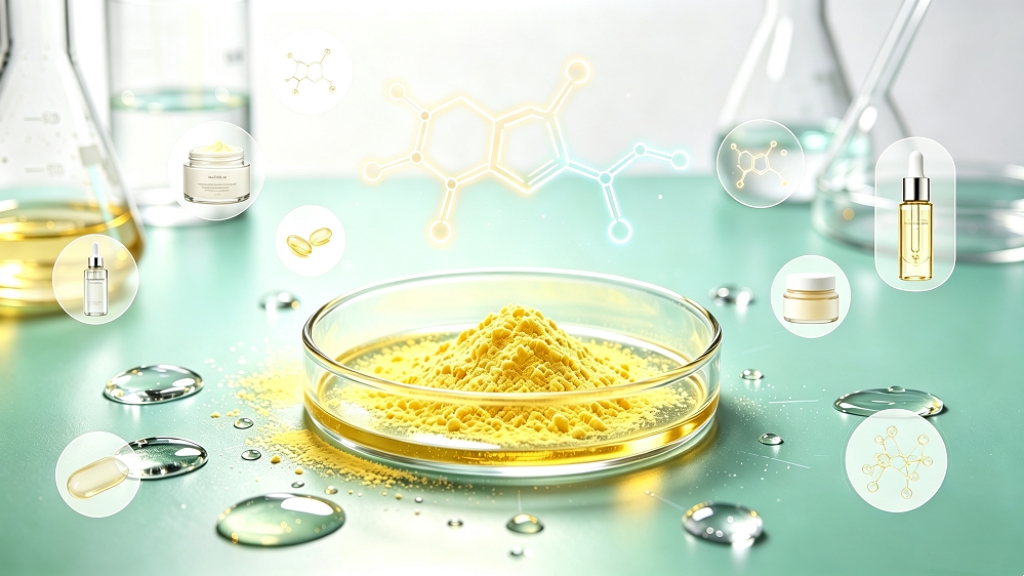
Retinol, lipid-soluble cosmetic raw material for anti-aging conditioning. Specify application purpose, content and packaging upon inquiry. Xi'an Wanlv supplies supporting technical documents and samples.
Overview
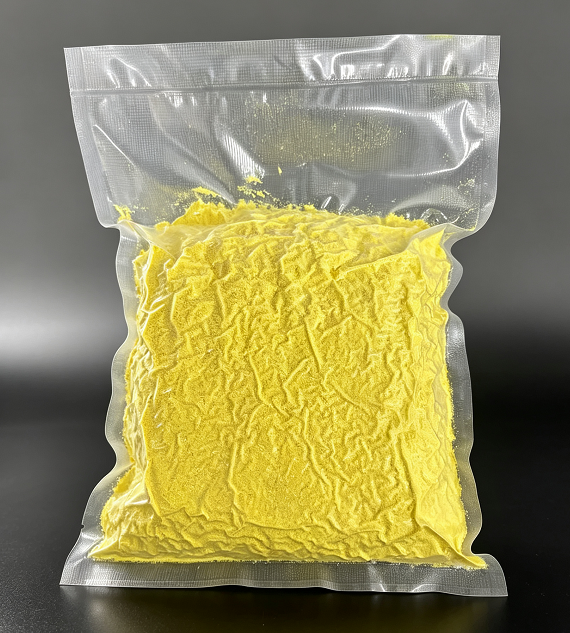
What is Retinol?Retinol, commonly known as Vitamin‑A alcohol or A‑alcohol, is a fat‑soluble active ingredient belonging to the vitamin A family. It is included in the Catalogue of Already‑Used Cosmetic Raw Materials (2021 Edition). The raw material appears as pale‑yellow to yellow crystals. It is sensitive to light, heat and oxygen and prone to oxidative degradation. Encapsulation and antioxidant compounding processes are widely adopted in formulation work to improve system stability. Skin‑related mechanism: Retinol acts on relevant skin cell receptors, regulating the proliferation and differentiation of epidermal cells. It helps maintain normal epidermal metabolic rhythm and supports the natural texture status of skin. It is a classic vitamin‑A‑based active substrate for skincare. This ingredient can be applied in formulating leave‑on cosmetics such as serums, creams and lotions, suitable for skincare products targeting skin texture conditioning.
Key Parameters
Applications
Application in Leave‑on Facial Skincare
As a core active raw material for skin texture conditioning, it is widely used in various leave‑on facial skincare products, including serums, overnight skincare creams, facial lotions, eye creams and repair gels. The ingredient participates in the modulation of epidermal cell turnover, suitable for daily skincare formulations for mature‑stage skin. Given that retinol carries certain irritancy risk and is susceptible to oxidation, low‑temperature processing, nitrogen blanketing and light‑shield packaging are commonly adopted at formulation stage. Combined with lipid‑body and cyclodextrin encapsulation technology, or compounded with antioxidants such as Vitamin E, panthenol and centella asiatica extract, it stabilizes the system and improves skin tolerance, suitable for long‑term mild‑action skincare development.
Application in Full‑body Skin Care
Applicable to formulation development of body lotions, body serums and body repair creams. It mainly works on body skin texture conditioning to help maintain favorable skin condition. This segment is strictly regulated: finished‑product Retinol Equivalent (RE) shall not exceed 0.05 % RE. Since body skin shows lower tolerance compared with facial skin, irritancy testing and stability verification are essential in formulation work. Low‑dose compounding and slow‑release encapsulation systems are preferred to reduce risks such as skin dryness, tightness and stinging, for long‑acting full‑body skincare products.
Professional Salon‑grade Skincare Application
Suitable for developing salon‑specific high‑potency serums, repair masks and other professional skincare goods. Salon scenarios impose higher requirements for raw‑material activity and formulation stability. High‑purity retinol is frequently applied with sophisticated encapsulation technology for precise controlled release. Full‑set safety assessment and irritancy tests shall be completed. It fits periodic skin‑texture conditioning and advanced skincare scenarios, delivering stable formulation solutions for beauty institutions.
Formulation for Skincare‑infused Color Cosmetics
For developing color cosmetics with skincare benefits, such as foundation liquids, tinted moisturizers and concealers. Leveraging retinol’s texture‑regulating properties, it enables hybrid products combining makeup and skincare. Color‑cosmetic matrices are complex with oils, powders and pigments. Formulation development focuses on raw‑material compatibility. Antioxidant compounding and light‑&‑oxygen‑blocking processes mitigate retinol oxidation discoloration and activity loss, delivering stable color‑cosmetic formulas.
High‑end Formulation Customization & R&D Application
For novel formula development and skincare‑mechanism research in universities and beauty‑R&D laboratories, also supporting brand‑oriented high‑potency active‑system customization. It can be compounded with actives such as ceramides, squalane and ectoin to build multi‑dimensional skincare composite systems. It supports R&D iteration of emerging skincare technologies including sustained release, targeted penetration and micro‑capsule encapsulation, supplying core raw‑material support for high‑end skincare innovation.
Product FAQ
What is Retinol’s status in China’s cosmetic raw material inventory?
Retinol, INCI: RETINOL, CAS: 68‑26‑8; 11103‑57‑4, is listed in the Catalogue of Already‑Used Cosmetic Raw Materials (2021 Edition), No.06162. It is a legal cosmetic raw material and not a prohibited ingredient. There is no mandatory statutory upper limit under Chinese regulations. Formulators are recommended to perform safety assessments referring to the RE‑based limits from SCCS safety evaluations.
What are the key differences among Retinol, Retinal and Retinoic Acid?
All three belong to the Vitamin‑A family. Retinol (A‑alcohol): permitted for cosmetics; it exerts effects after multi‑step bioconversion in skin. Retinal: permitted for cosmetics; requires fewer conversion steps. Retinoic Acid: prohibited in cosmetics. It is a pharmaceutical substance and must not be added to cosmetic products. Formulation production and storage shall control the risk of Retinoic‑Acid formation caused by oxidative degradation of retinol.
What is RE (Retinol Equivalent) and why should formulations calculate by RE?
RE stands for Retinol Equivalent, a unified unit to convert the biological activity of retinol and retinol esters. Different vitamin‑A derivatives have different molar masses; their activities cannot be compared simply by mass percentage. EU regulatory limits are defined in RE. Formulations exported to the EU must calculate concentrations based on Retinol Equivalent.