
What is Adenosine?
Adenosine is a nucleoside composed of adenine and ribose, widely present in all human cells and serving as the core structural unit of ATP (adenosine triphosphate). ATP is known as the cellular "energy currency", while adenosine is its metabolite. It plays a critical role in cellular energy metabolism, signal transduction and physiological regulation.
Four types of adenosine G-protein-coupled receptors, namely A1, A2A, A2B and A3, are distributed on the cell membranes of skin tissues. Topically applied adenosine exerts its skin biological effects mainly through A2A and A2B receptors. Instead of simply "supplementing energy to cells", it acts more as a signaling molecule to initiate downstream pathways and regulate cellular activity.
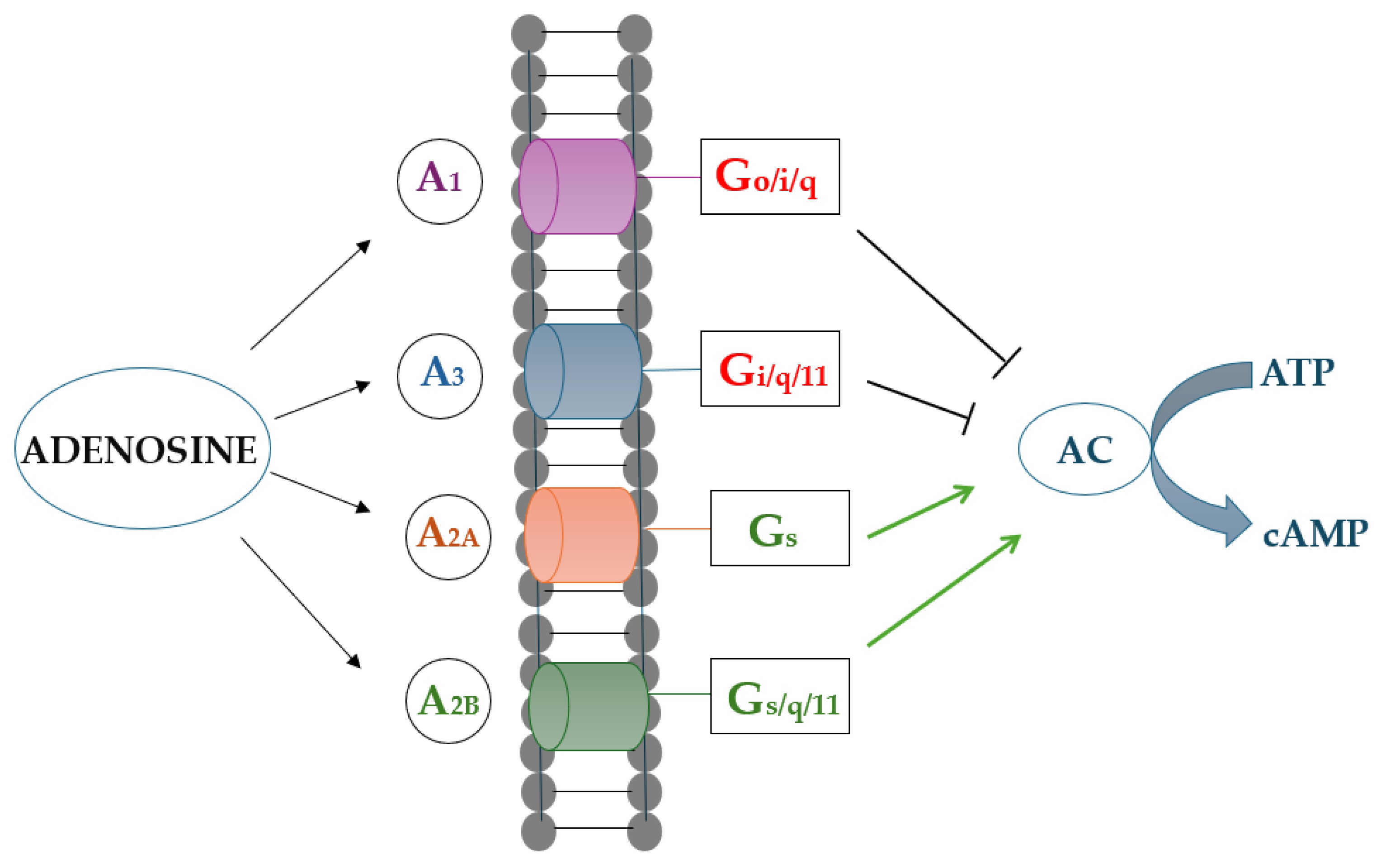
In the cosmetic industry, adenosine is generally produced via biofermentation technology. It is listed in China’s Inventory of Existing Cosmetic Ingredients and widely used in cosmetic products across South Korea, Japan, the EU and other markets.
Basic Information of Adenosine Raw Material
Item | Content |
|---|---|
Chinese Name | 腺苷 |
English Name | Adenosine |
Chemical Name | 9-β-D-ribofuranosyladenine |
INCI Name | Adenosine |
CAS No. | 58-61-7 |
Molecular Formula | C₁₀H₁₃N₅O₄ |
Molecular Weight | 267.24 |
Appearance | White crystalline powder |
Core Skincare Benefits of Adenosine
1. Anti-wrinkle and Firming, Activation of Fibroblasts
The most well-recognized benefit of adenosine is anti-wrinkle action. Studies show that adenosine binds to A2A receptors on cell surfaces and activates intracellular signaling pathways to promote fibroblast proliferation and collagen synthesis. Collagen is the core structural protein maintaining skin elasticity and firmness. Its synthetic capacity declines with aging, and adenosine can stimulate this process to a certain extent.
In addition, adenosine boosts the production of elastin and fibronectin, improving skin laxity and fine lines from multiple dimensions. Multiple human efficacy evaluation trials in South Korea have demonstrated visible improvements in periorbital fine lines and nasolabial folds after 8 weeks of continuous use of adenosine-containing skincare products.
2. Anti-Inflammatory & Soothing, Assisted Barrier Repair
Adenosine exhibits definite anti-inflammatory properties. By binding to A2A receptors on immune cells, it inhibits the release of pro-inflammatory factors such as TNF-α and IL-6, while stimulating the production of anti-inflammatory factor IL-10. For sensitive skin, acne-prone skin, rosacea and other inflammatory skin conditions, adenosine delivers mild soothing effects.
Adenosine also regulates cell migration and proliferation to accelerate epidermal cell renewal and wound healing. When the skin barrier is compromised, adenosine promotes keratinocyte differentiation and helps rebuild a healthy skin barrier. Therefore, it is frequently formulated together with barrier-repairing ingredients including ceramides and cholesterol.
This mechanism explains why adenosine is commonly incorporated into post-procedure repair products — it reduces redness and discomfort without irritating the skin.
3. Hair Follicle Modulation to Improve Hair Condition
Adenosine acts on A2B receptors of dermal papilla cells, elevates cAMP, upregulates FGF-7 and activates the Wnt/β-catenin pathway. It promotes hair follicle cell proliferation, prolongs the anagen phase of hair growth, and increases hair diameter and density. Systematic reviews indicate that formulations containing 0.75% adenosine show promising results in subject satisfaction and hair thickening. Adenosine is widely applied in anti-hair loss and hair growth serums, with lower irritation compared to minoxidil and suitability for most people.
4. Auxiliary Antioxidant Effect
Although adenosine itself is not a potent antioxidant, it indirectly mitigates skin damage caused by oxidative stress by modulating cellular metabolism and reducing inflammatory responses. Combined with antioxidants such as vitamin C, vitamin E and ergothioneine, it can achieve synergistic benefits.
Application Characteristics of Adenosine in Formulations
Property | Description |
|---|---|
Solubility | Water-soluble, suitable for aqueous formulations; practically insoluble in organic solvents such as ethanol and ether |
Stability | Good solubility in dilute acid and dilute alkali environments. It is resistant to decomposition under conventional room-temperature sealed storage. Crystals tend to precipitate upon freezing, but redissolve after rewarming without loss of activity. |
Recommended Concentration | Generally 0.01%–1% |
Compatibility | Compatible with most skincare ingredients, especially suitable for combination with peptides and niacinamide |
Applicable Dosage Forms | Serums, creams, eye creams, masks, ampoules, etc. |
It is worth noting that the skincare efficacy of adenosine is dose-dependent, yet higher concentration does not always yield better results. Research indicates that an addition level of 0.04%–0.1% meets the efficacy claim threshold for anti-wrinkle products in South Korea.
Formulation Combination Strategies of Adenosine with Popular Ingredients
Gentle Anti-Ageing Combo: Adenosine + Panthenol + Ceramide → Anti-wrinkle + Barrier repair, friendly for sensitive skin
Potent Anti-Ageing Combo: Adenosine + Peptides (e.g., Copper Tripeptide) → Synergistic signaling pathways, achieving firming and soothing while reducing irritation from high-dose peptides
Scalp Formulation: Adenosine + Pyrimidine Diamine Oxide + Caffeine → Synergistic action on hair follicles and improvement of scalp microenvironment
Antioxidant Combo: Adenosine + Ergothioneine → Anti-photoageing and repair of oxidative damage
Safety Assessment
The Cosmetic Ingredient Review (CIR) safety assessment conclusion for adenosine cosmetic raw materials: under current cosmetic usage patterns and concentrations, adenosine is safe, low-sensitizing and non-phototoxic, and can be used in facial, neck, moisturizing and scalp products.
Notes
Avoid strong acid/alkali conditions and prolonged high-temperature processing in formulation systems;
Patch testing on human subjects is still required for high-concentration formulations;
To claim anti-wrinkle benefits for cosmetics marketed in China, corresponding cosmetic efficacy evaluations must be completed. Overseas marketing standards cannot be cited directly.
Market Status and Future Outlook
Currently, adenosine is included in anti-ageing lines of many well-known brands, with mature applications particularly among South Korean skincare brands. Driven by the rising "ingredient-focused consumer" trend and the improvement of cosmetic efficacy evaluation systems, adenosine is evolving from an auxiliary ingredient into a core functional active.
Future research directions for adenosine may include:
Integration with novel delivery systems (e.g., liposomes, nanoemulsions) to enhance skin permeation;
Exploration of adenosine derivatives (such as adenosine phosphate) to expand applications in brightening and keratin modulation;
In-depth research in microbiome skincare and skin immune regulation.
Check the product link:Adenosine
References
Abella V, et al. The possible role of the nucleoside adenosine in countering skin aging: A review. Biofactors. 2022;48(5):1027–1042. https://pmc.ncbi.nlm.nih.gov/articles/PMC9804842/
Kim JH, et al. Adenosine as an Active Ingredient in Topical Preparations Against Hair Loss: A Systematic Review and Meta-Analysis of Published Clinical Trials. J Clin Med. 2024;13(10):2902. https://pmc.ncbi.nlm.nih.gov/articles/PMC12383921/
Yeo S, et al. Design and Characterization of Elastic Artificial Skin Containing Adenosine-Loaded Solid Lipid Nanoparticles for Treating Wrinkles. Pharmaceutics. 2021;13(2):33. https://www.mdpi.com/1999-4923/13/2/33
Cosmetic Ingredient Review. Safety Assessment of Adenosine Ingredients as Used in Cosmetics. 2020. https://www.cir-safety.org/sites/default/files/adenos09202FR.pdf
Kim, J. et al. (2018). Anti-wrinkle effects of adenosine in human skin. Journal of Cosmetic Dermatology.
中国《已使用化妆品原料目录》(2021版)