
【Popular Science Disclaimer】This article is an ingredient science popularization content, sourced from public academic research literature. It is only for industry knowledge sharing and does not constitute a product efficacy commitment. The actual efficacy of cosmetics shall be subject to the filing information, and this content does not replace medical diagnosis and treatment.
Origin of PDRN
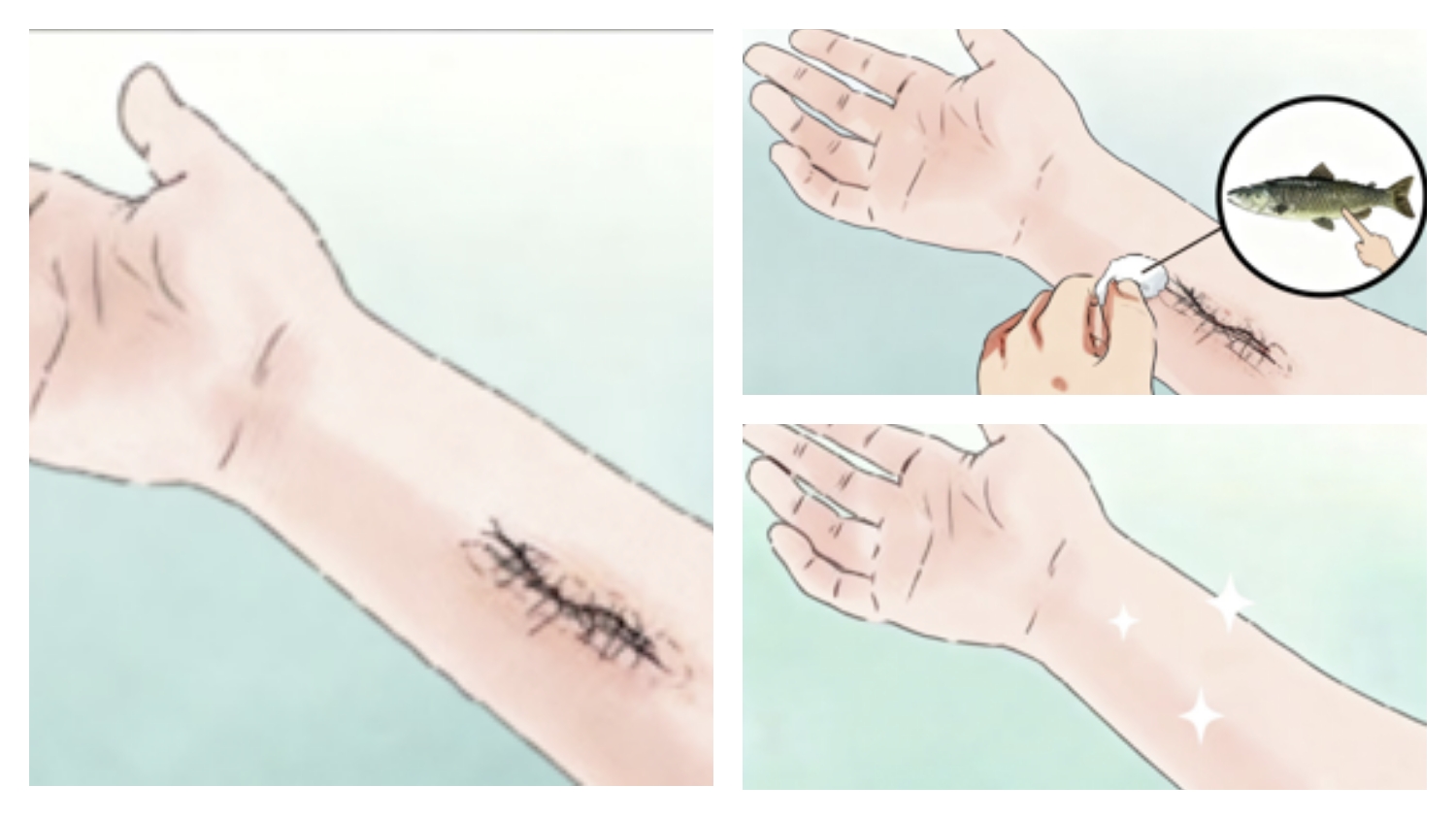
A long time ago, a European fisherman suffered a severe arm injury while working at sea. Due to inadequate medical facilities at that time, his wound became purulent continuously and the skin tissue kept ulcerating. The fisherman could only try the folk remedy passed down from his ancestors, which was to squeeze out the semen from salmon testes and apply it to the wound periodically. Day after day, he found that the wound not only stopped ulcerating but also healed completely. Later, experts and scholars launched in-depth research and discovered the PDRN component in salmon.
Development of PDRN
In 1952, Italian scientists extracted a unique DNA fragment from salmon germ cells, named it Polydeoxyribonucleotides (PDRN), and confirmed its unique property of promoting cell regeneration.
In the 1990s, PDRN officially entered the clinical field, showing significant efficacy and application potential in the treatment of chronic wound healing, burn skin wounds and other thermal injuries.
In 2008, an Italian company launched the first PDRN medicinal injection for wound treatment and bone soft tissue regeneration; in the same year, the Korea Food and Drug Administration officially approved PDRN for tissue repair and skin graft trauma treatment.
In 2018, Korean beauty brands took the lead in breaking through the formulation application bottleneck of PDRN, integrating it into skincare product systems to develop anti-aging products with cell-level repair capabilities. Brands like Priano entered the Chinese market and quickly gained popularity with the concept of "salmon DNA repair".
By 2026, the application of medical device-grade PDRN products has matured, the cosmetic-grade PDRN market is booming, and the regulations for applicable topical PDRN and food-grade PDRN are being gradually standardized.
Basic Information of PDRN Raw Material
PDRN (Poly deoxy ribo nucleotides), with the Chinese name Polydeoxyribonucleotides and INCI name Sodium DNA, is a deoxyribonucleic acid polymer extracted from salmon semen through a strict purification process. It is one of the complexes of raw materials for intracellular DNA synthesis.
PDRN contains 50% double-stranded deoxyribonucleotides. The two polydeoxyribonucleotide strands are connected by hydrogen bonds between base pairs (Adenine(A)=Thymine(T); Guanine(G)=Cytosine(C)), finally forming a double helix structure.
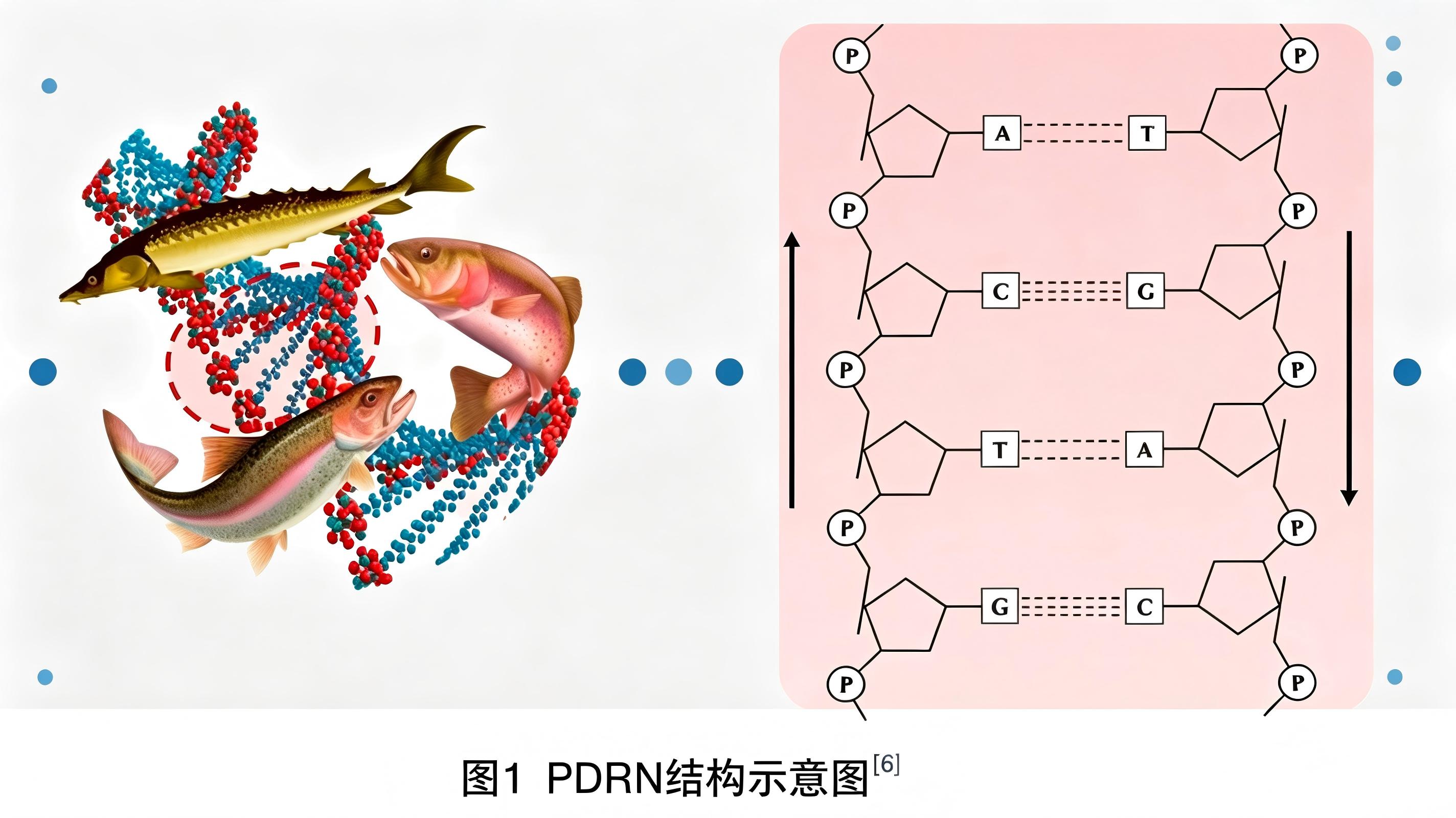
The base composition of PDRN is up to 98% similar to human DNA, with high safety and stability. Based on this biological effect, its clinical application scope has gradually expanded, showing obvious effects in tissue repair, wound healing, anti-ischemia, anti-inflammation and other aspects.
Mechanism of Action of PDRN
Providing raw materials for cellular DNA synthesis
The nucleotides and nucleosides produced by PDRN can rapidly contribute to DNA generation, providing sufficient raw materials for tissue regeneration and injury repair.
Adenosine Receptor 2 (A2A) Agonist
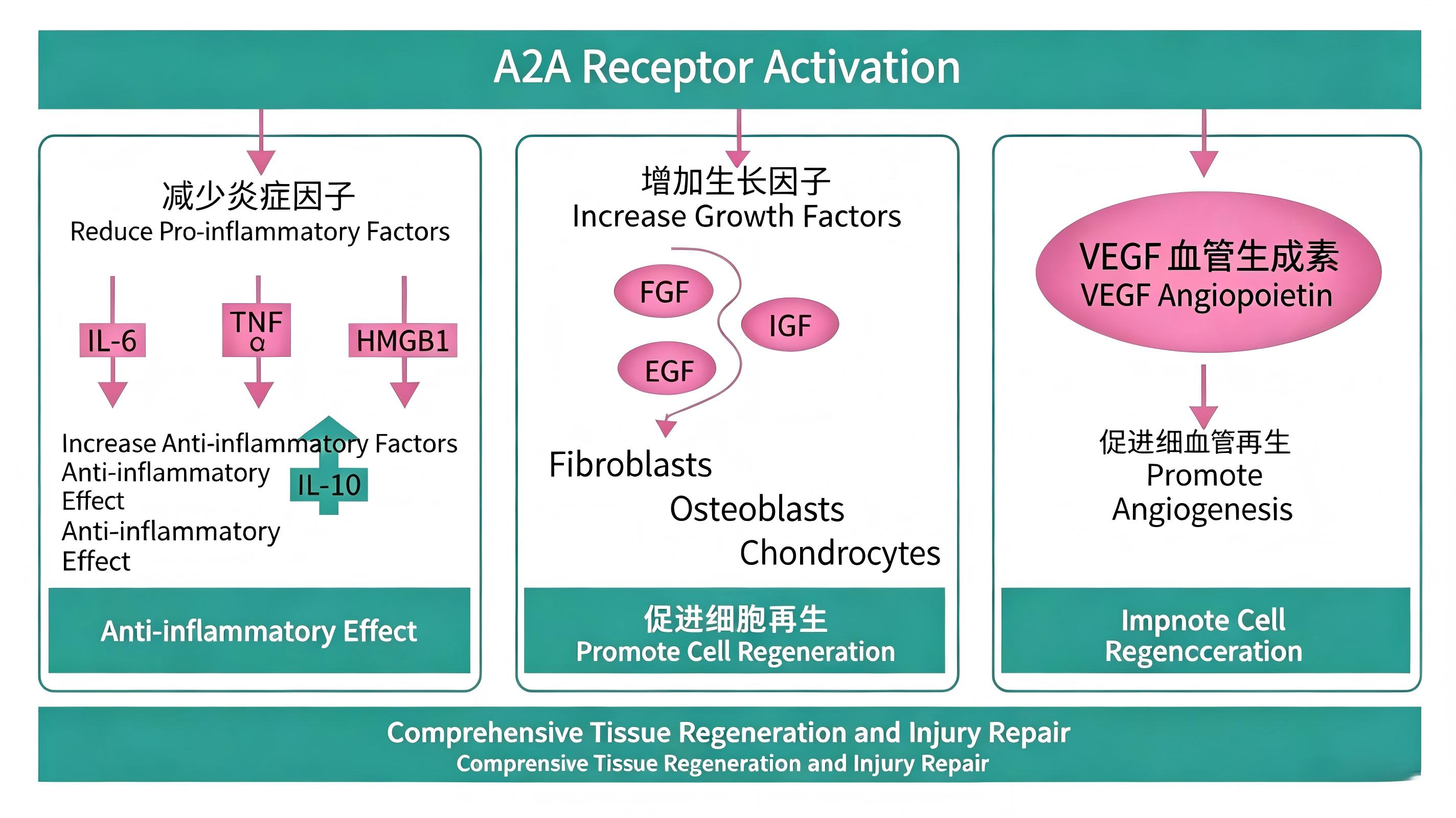
① By activating the adenosine A2A receptor, PDRN inhibits the activation of the Nuclear Factor-κB (NF-κB) signaling pathway, reduces the expression of pro-inflammatory markers such as Tumor Necrosis Factor-α (TNF-α) and Interleukin-6 (IL-6), thus exerting an anti-inflammatory effect.
② By agonizing the A2A receptor, PDRN induces intracellular cAMP activation, promotes the phosphorylation of Protein Kinase A (PKA) and cAMP Response Element-Binding Protein (CREB), upregulates anti-apoptotic related proteins, and inhibits the expression of Apoptotic Protease Activating Factor-1 (Apaf-1), Caspase-3 and Caspase-9, thus playing an anti-apoptotic role.
③ By activating the A2A receptor, PDRN promotes the secretion of Vascular Endothelial Growth Factor (VEGF), a highly specific factor that promotes vascular endothelial cell growth, thereby enhancing angiogenesis and improving microcirculation.
④ By agonizing the A2A receptor, PDRN inhibits ERK phosphorylation to activate the MAPK pathway, suppresses the expression of MMPs and inflammatory factors, and plays a positive role in skin regeneration.
Applications of PDRN
Pharmaceutical Field (Salmon Skin Booster)
① Representative brands: Dermaheal, Priano, etc.
② Specific application form: The "PDRN skin booster", pre-filled in syringes as a disposable sterile product, is defined as a medical device-drug combination product. It consists of a composite solution of Sodium Hyaluronate (HA) and Polydeoxyribonucleotides (PDRN), which is injected into the dermis layer of the face to improve skin condition.
Cosmetic Field (Topical Essence, Ampoule, Mask)
① Efficacy: Mainly focuses on epidermal repair, soothing and stabilizing the skin.
② Recommended application methods: PDRN combined with hydrolyzed spongin, which opens channels for PDRN; "spherical PDRN" that processes PDRN into supramolecular microspheres for better transdermal absorption.
Biomaterials (Tissue Engineering)
Compound with hydroxyapatite, β-TCP and collagen scaffolds to prepare bone repair scaffolds; used for 3D printing of bone scaffold coatings to improve cell adhesion and promote osteogenesis, which is also a common combination in scientific research: PDRN + femur model + HA.
Other Clinical Applications
Chronic ulcers, corneal repair, local injection for sports injuries, etc. PDRN was approved for wound treatment in Europe at an early stage.