
Salmon‑derived PDRNPolydeoxyribonucleotide
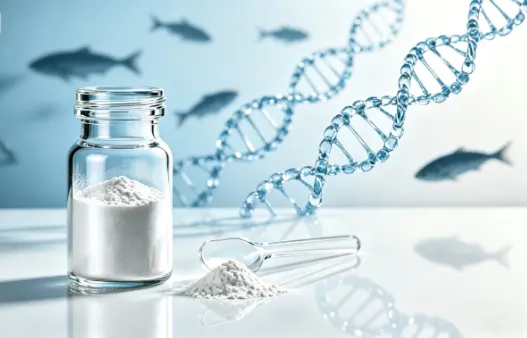
For procurement of salmon PDRN raw materials, confirm application grade, molecular weight parameters and packaging specifications prior to purchase. It applies to R&D of skincare substrates, aesthetic-related and biomedical formulations. Xi'an Wanlv offers precise graded supply, full batch documents (COA/MSDS), sample testing and end-to-end inquiry support.
Overview
What is salmon‑derived PDRN raw material?
Salmon PDRN (INCI: Sodium DNA) is a mixture of short-chain deoxyribonucleotides extracted from salmon milt. It acts by activating the A2A adenosine receptor. It is mainly used for soothing redness, supporting skin barrier care and comforting fragile skin. It also delivers antioxidant benefits, helps maintain collagen status and improves skin texture. Different from long-chain PN, it responds faster. The recommended addition level in cosmetics is 0.01–0.1%. It is suitable for topical formulations such as soothing serums and facial masks. Avoid compounding with strong alkali and strong oxidizing systems. Injectable formulations are classified as medical devices. Cosmetics made with this raw material shall not claim medical or filling effects and are not intended for wound treatment.
What is the optimal molecular‑weight range of active PDRN?
Recommended molecular‑weight range for cosmetic topical use: 50‑1500 kDa; low‑molecular‑weight fraction 50‑200 kDa favors penetration and distribution on skin surface.
What is the difference between PDRN and PN?
PDRN consists of shorter DNA fragments; PN(Polynucleotide) refers to longer‑chain nucleic‑acid fragments, differing in molecular‑weight, bio‑activity and application.
Learn more:Introduction to Salmon PDRN (Polydeoxyribonucleotide)
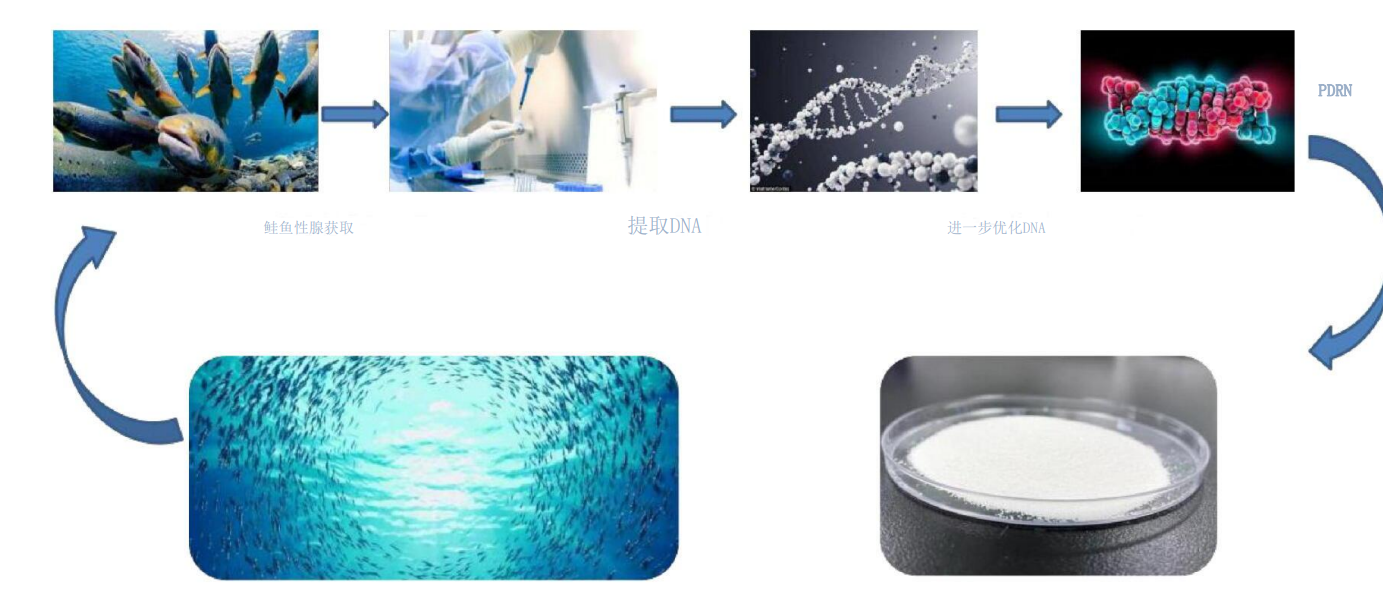
Figure 1 – PDRN Production Process
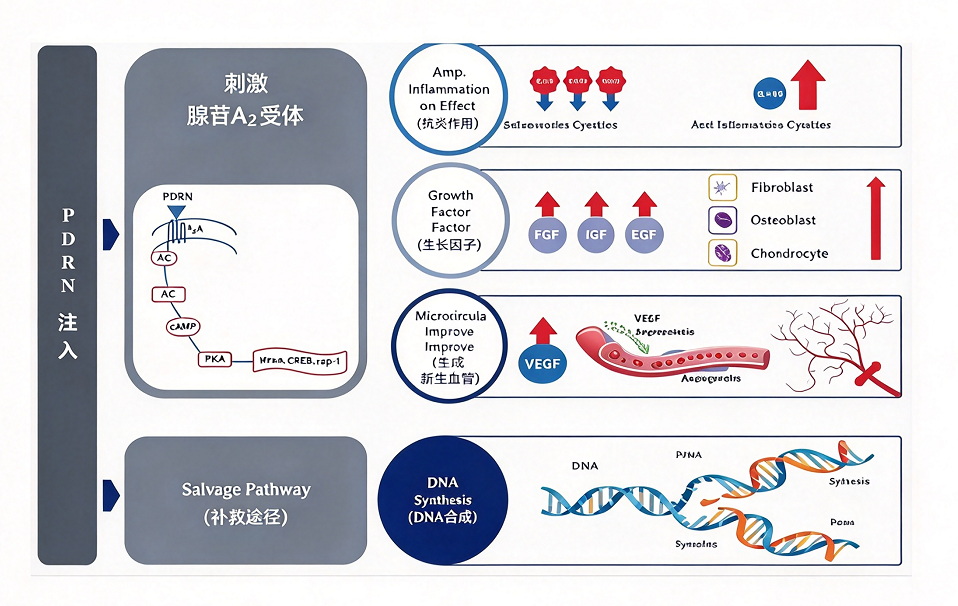
Figure 2 – Mechanism of PDRN
Key Parameters
Applications
Regenerative Medicine Research
Literature studies indicate that PDRN has activities including promoting cell proliferation, anti-inflammation and biological repair at the tissue level. Relevant basic research covers wounds, bones and tendons, oral cavity, cornea and other tissues. Clinical applications can only be implemented after obtaining registration of pharmaceuticals or medical devices.
Aesthetic Medicine Research
According to literature in regenerative aesthetic medicine, PDRN can serve as a skin-nourishing raw material. In mesodermal model studies, it is observed to help improve skin elasticity and skin texture. Injection applications require products with corresponding medical device certification. Cosmetic-grade raw materials for external use cannot be injected. Skin care after photoelectric procedures is only a research direction in literature.
Skincare & Cosmetics
It can be incorporated as a cosmetic raw material into formulations to help deliver skin barrier soothing, moisturizing and antioxidant effects; it helps improve dry and rough skin and brighten skin tone.
Functional Raw Material Research
In vitro studies show PDRN possesses antioxidant activity. Its effects related to gastrointestinal tract and joints are only laboratory findings and cannot be claimed as health benefits for food. Food applications can only proceed after completing corresponding regulatory filings.
Product FAQ
What is PDRN? What is its INCI name?
PDRN stands for Polydeoxyribonucleotide. Its cosmetic INCI name is Sodium DNA. It is extracted from deep‑sea salmon testes and is a mixture of DNA fragments. It shares high homology with human DNA base sequences and exerts repairing and soothing effects via the adenosine A2A receptor pathway.
What are the differences between PDRN and PN?
PDRN has a molecular weight of 50‑1500 kDa, focusing on anti‑inflammatory redness relief and skin barrier repair. PN is longer‑chain polynucleotide with higher molecular weight, focusing on collagen regeneration and moisturizing effect. They differ in molecular weight and functional focus and cannot be directly substituted for each other.
What are the core benefits of PDRN?
Anti‑inflammatory & redness relief, skin barrier repair, post‑procedure soothing, anti‑oxidation and photo‑damage improvement. It helps boost fibroblast activity. Cosmetic products shall not claim injectable‑grade regenerative or filling effects.
Is Sodium DNA (PDRN) listed in China’s cosmetic ingredient inventory?
Under INCI name Sodium DNA, it is included in the Inventory of Existing Cosmetic Ingredients. It can be legally used for topical cosmetics. There is no mandatory dosage limit in China, yet finished products require comprehensive safety assessment.