
CaHA(Calcium‑Hydroxylapatite)Calcium Hydroxyapatite
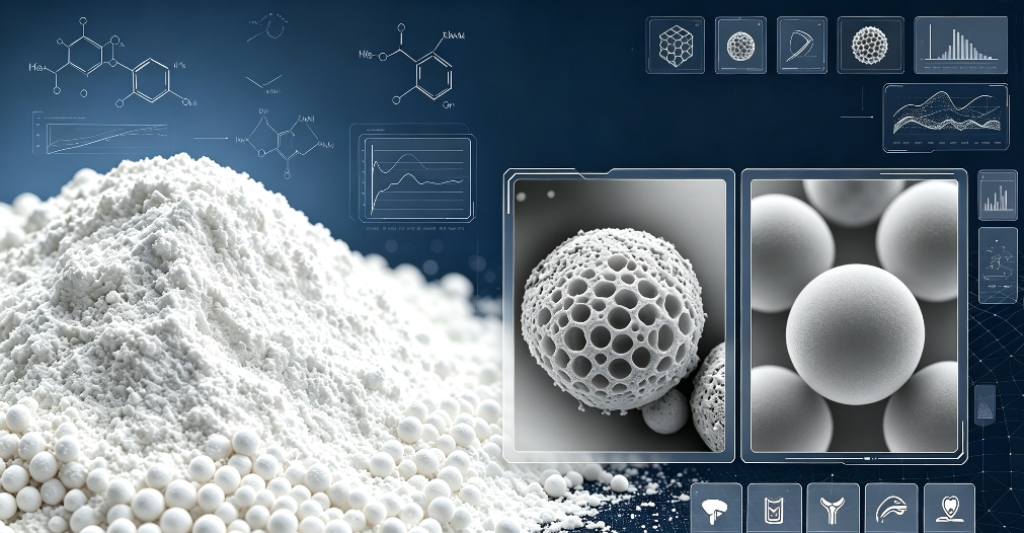
CaHA is commonly used for substrate R&D in soft tissue augmentation and bone repair. Confirm end application, microsphere particle size, spherical morphology and packaging specifications prior to purchase. Xi'an Wanlv is available to negotiate supply limits, batch documents and samples.
Overview
Why is Hydroxyapatite (HAP) gaining increasing popularity?Hydroxyapatite is a bioactive material composed of calcium and phosphorus. It is also a natural inorganic component of human bone and teeth, giving it inherent advantages in biomedical applications.
What are its characteristics?Its composition is close to human hard tissue, with good biocompatibility, bioactivity, safety, and a broad range of applications.
Where can it be applied?Hydroxyapatite is widely used in bone repair, orthopedic implant surface coatings, bioceramics, tissue engineering, 3D printing, and regenerative medicine, as well as many research and industrial development scenarios.
What can Wanlv provide?Wanlv offers stable, specification-diverse hydroxyapatite products and targeted material support tailored to project needs, helping customers improve R&D efficiency and application conversion.
Key Parameters
Applications
Bone repair
Good osteoconductivity to support bone tissue repair and regeneration.
Premium aesthetic bioceramics
Bioceramic materials combining high purity, stability, and excellent performance.
Research & development
Joint R&D with universities, laboratories, and research teams; documentation and sample requests supported.
Product FAQ
What are Calcium Hydroxyapatite Microspheres (CaHA)?
Calcium Hydroxyapatite Microspheres (CaHA) are synthetic calcium‑phosphate bioceramic microspheres. Their chemical composition is highly similar to the inorganic minerals of human bones and teeth. They feature excellent biocompatibility and bioactivity, low immunogenicity and stable physicochemical properties. They are core raw materials in regenerative medicine, tissue engineering and biological dressing sectors.
What is the difference between CaHA microspheres and conventional hydroxyapatite powder?
Conventional hydroxyapatite mostly exists as irregular powder with severe agglomeration and poor dispersibility. Our CaHA are well‑defined microspheres with high sphericity, uniform and controllable particle size, good fluidity and low tendency to agglomerate or settle. With stable specific surface area, they are suitable for precision formulation, scaffold preparation and coating processes, delivering far better performance and stability than ordinary powder raw materials.
What are the key material advantages of calcium hydroxyapatite microspheres?
① High biosafety: chemically close to human natural minerals, good compatibility and low irritation; ② Uniform spherical morphology: narrow particle‑size distribution and stable batch‑to‑batch consistency, suitable for fine‑scale R&D and production; ③ Good ionic activity: capable of slow release of calcium and phosphate ions for tissue‑related material research; ④ Excellent compatibility: can be compounded with polymers, gels and dressing systems without delamination or caking; ⑤ Stable properties: storage‑tolerant and oxidation‑resistant, applicable to diverse formulation development.
What particle‑size ranges are available for CaHA microspheres? Is customization supported?
Standard micron‑size ranges are in regular supply, featuring intact spherical shape and narrow particle‑size distribution. Customization is available for particle size, pore structure and Ca/P ratio. Dense or porous microspheres can be tailored to meet experimental and production requirements, with corresponding particle‑size test data provided.
What are the application differences between porous CaHA microspheres and solid CaHA microspheres?
Solid microspheres deliver higher sphericity, superior fluidity and homogeneous dispersion, ideal for precision formulations, dressing coating and composite‑system modification. Porous microspheres possess abundant pore structures and large specific surface area, suited for cell attachment, drug loading, tissue‑engineering scaffolds and adsorptive biomaterial research. Selection can be made according to customer application scenarios.
What are the main application fields of calcium hydroxyapatite microspheres?
Qualified raw‑material applications include tissue‑engineering scaffold R&D, bone‑repair biomaterials, regenerative‑medicine research, wound‑dressing raw materials, biological carrier materials, biomedical formulations, university laboratory research and bioceramic composite development. This product is a basic raw material, not an injectable aesthetic finished product, and shall not be used for clinical injection therapy.