
Hydroxyapatite (HAP/CaHA), the core inorganic component of human bone and tooth enamel, has become a key inorganic functional material widely used in biomedicine, daily chemical industry, environmental remediation and other fields, owing to its excellent biocompatibility, osteoconductivity and chemical stability. Its crystal morphology, particle size and pore structure are the core factors governing the physicochemical properties of powder and its downstream application performance. Achieving structural customization through precise synthetic regulation is critical to bridging laboratory research and large-scale industrial production.
🔬 Main Morphology Control Technologies
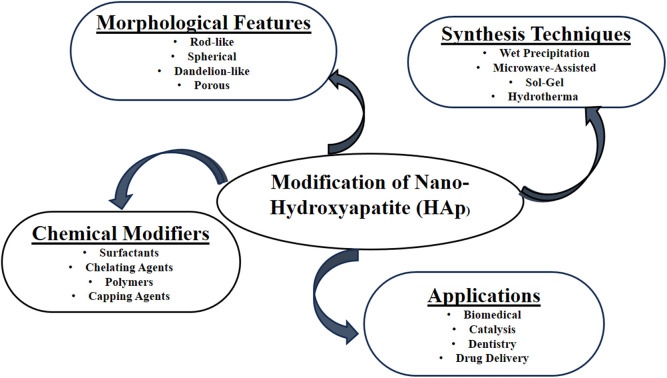
At present, multiple mature technologies have been developed for precise morphology control of HAP. Among them, the hydrothermal method and spray drying method are the two most widely adopted core technologies.
Hydrothermal Method: Under specific temperature and pressure conditions, it regulates the competition between crystal nucleation and growth. By adjusting reaction temperature, pH value, calcium-phosphorus ratio and reaction duration, needle-like and rod-like products with high crystallinity can be directionally synthesized. It greatly reduces crystal defects and yields nano-sized needle-like HAP with controllable aspect ratio. Such products feature high crystallinity and good dispersibility, which well meet the performance requirements of bone repair materials.
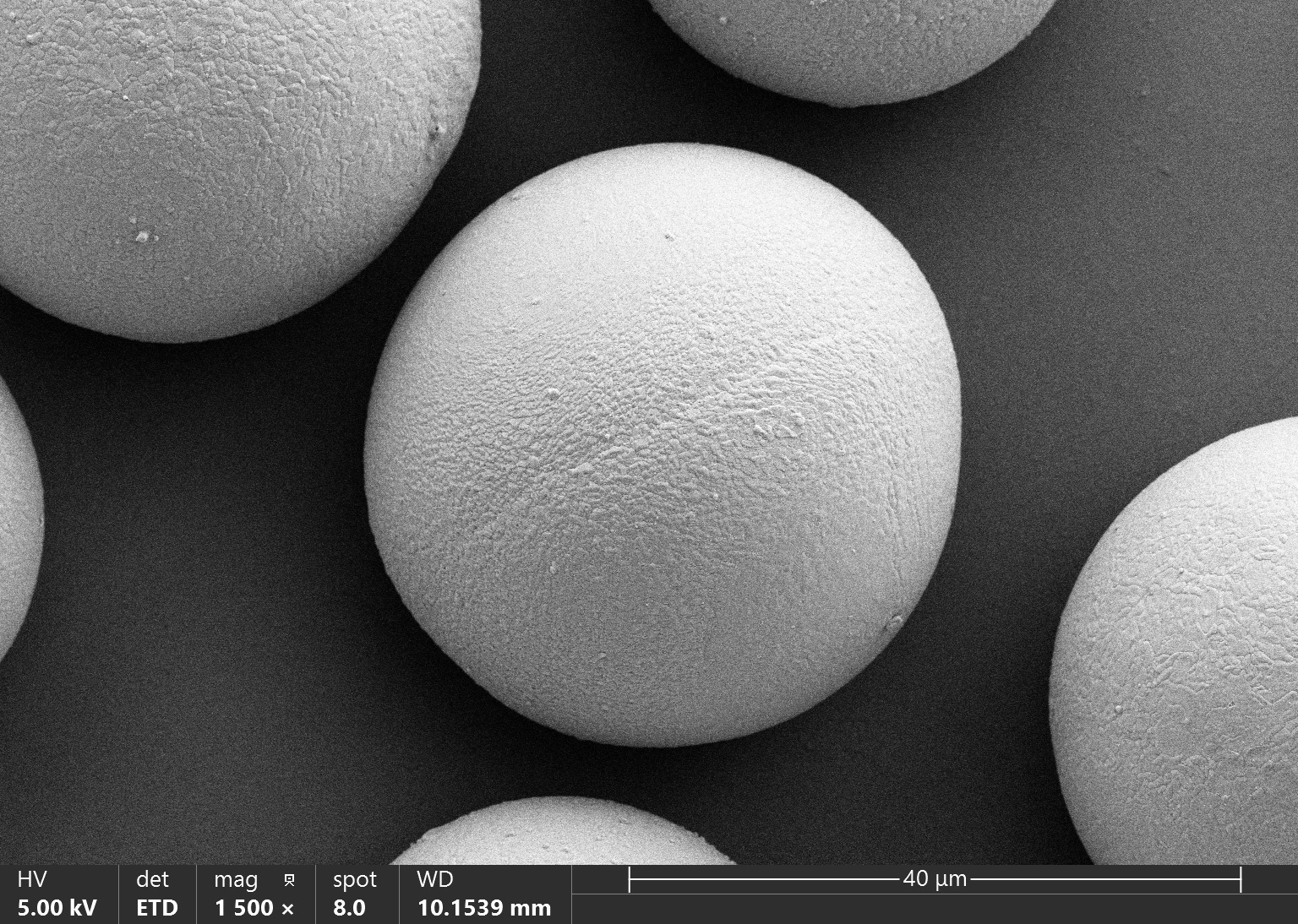
Spray Drying Method: The precursor slurry is atomized and rapidly dried to form spherical particles under the surface tension of droplets. It enables efficient mass production of micron-sized HAP microspheres with uniform particle size distribution and high sphericity. The internal porosity of microspheres can also be flexibly tuned by adjusting slurry solid content and spray parameters, making it the preferred process for large-scale manufacturing of spherical CaHA microspheres. It is especially suitable for application scenarios requiring high particle regularity, such as medical aesthetic carriers and 3D printing.
In addition, auxiliary approaches including adjusting reactant dropping rate and adding specific surfactants are adopted to further suppress preferential growth of certain crystal planes, so as to realize precise control over morphology and particle size across the full scale from nanometers to millimeters.
📊 Performance and Application Characteristics of HAP/CaHA with Different Structures
HAP/CaHA powders with varied morphology, particle size and pore structure show remarkable differences in physicochemical properties, corresponding to completely different downstream application scenarios:
Needle-like HAP Needle-shaped HAP crystals possess low dislocation density and favorable mechanical properties. As particle size decreases gradually from 200 nm to 20 nm, product purity rises from 95% to 99%. Low-purity nano needle-like HAP can be used for toothpaste, mouthwash and soil remediation. The 20 nm high-purity needle-like products exhibit superior bioactivity, and serve as core raw materials for low-purity/high-purity artificial bone, bone scaffolds and bone screws, providing a bionic micro-interface for bone tissue ingrowth.
Short Rod-like HAP The 20 nm, 99% purity short rod-like HAP crystals combine the high specific surface area of nanomaterials with the mechanical support of rod-shaped structures. In high-purity artificial bone and bone screw products, it can improve material toughness and offer more attachment sites for osteoblasts to optimize osseointegration outcomes.
Spherical HAP Spherical HAP covers an extremely wide particle size range, including 15 μm, 50 μm, 100 μm, 200 μm and extending to 0.5 mm. Spherical products of different particle sizes fit distinct scenarios: small-size spherical particles are available for bone coating preparation and thermal spraying; medium-size products are suitable for 3D printing and bone repair; large millimeter-scale spherical particles can be directly applied in orthopedic implantation. Quasi-spherical 2 μm products can also be added as functional additives into toothpaste and mouthwash formulations.
Porous / Microporous / Solid Smooth CaHA Microspheres The density and pore structure of such CaHA microspheres are fully customizable. Spherical microspheres of 25–45 μm with porous, microporous and solid smooth structures feature different degradation rates and cell adhesion capacities, acting as core raw materials in the field of regenerative fillers for medical aesthetics. The porous structure provides sufficient space for cell colonization and new tissue ingrowth, while solid smooth structure delivers longer-lasting supporting effect and milder biostimulation response.
🏭 Controlled Synthesis and Customized Industrial Services
As an original manufacturer, we have established a mature synthetic process system to realize controllable synthesis of full-spectrum HAP/CaHA powder in terms of morphology and particle size. We can stably mass-produce multi-grade powder raw materials covering quasi-spherical, needle-like, short rod-like, spherical and mesoporous spherical morphologies, with particle sizes ranging from nanometer to millimeter scale. Our product grades include daily-use grade, food grade, biomedical grade and industrial grade, to fulfill application demands in toothpaste & daily chemicals, food additives, orthopedic implantation, medical aesthetic regeneration, 3D printing, water treatment, soil remediation and other sectors. Meanwhile, we provide targeted customized development services according to customers’ special performance requirements, delivering full-chain technical support for downstream clients from raw material selection to performance optimization.
Product link:HAP (Hydroxyapatite) Cosmetic Ingredient | WanlvCaHA(Calcium‑Hydroxylapatite)
References
[1] M. S., et al. Effects of different types of modifiers on structural variation of nano-hydroxyapatite for efficient application[J]. Frontiers in Chemistry. https://pmc.ncbi.nlm.nih.gov/articles/PMC12287764/
[2] Šupová M. High-aspect-ratio nanostructured hydroxyapatite: towards new functionalities for a classical material[J]. Biomaterials Science. https://pmc.ncbi.nlm.nih.gov/articles/PMC10732134/
[3] Rout S, et al. Hydroxyapatite-Based Natural Biopolymer Composite for Tissue Regeneration[J]. Polymers. https://pmc.ncbi.nlm.nih.gov/articles/PMC11356673/
[4] Rizzo I, et al. Improving the Mechanical Resistance of Hydroxyapatite/Chitosan Composite Materials Made of Nanofibers with Crystalline Preferential Orientation[J]. Materials. https://pmc.ncbi.nlm.nih.gov/articles/PMC9268343/