
HAP (Hydroxyapatite) Cosmetic Ingredient | Wanlv Hydroxyapatite
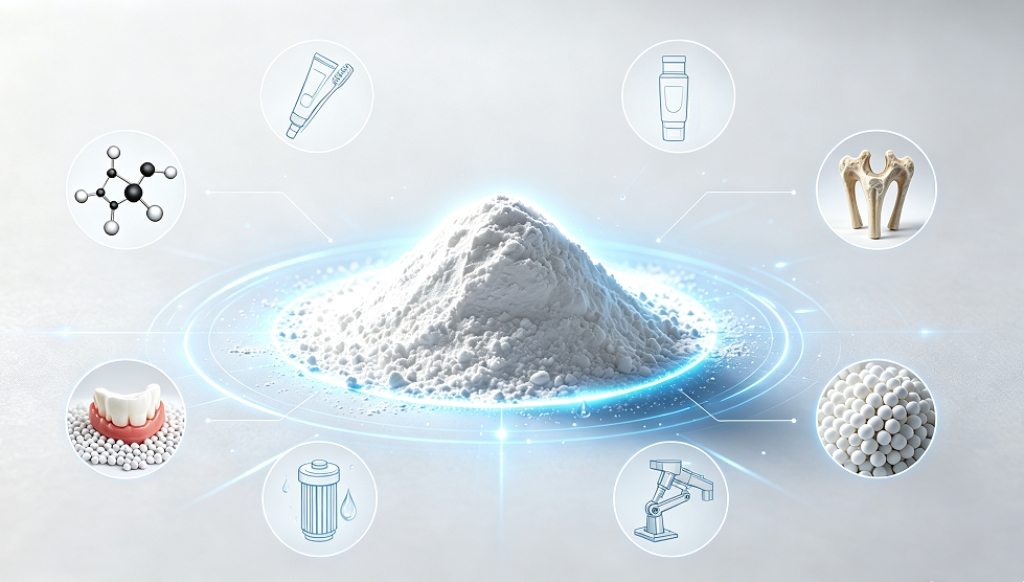
When purchasing hydroxyapatite, confirm industrial/food/medical grade first, then match particle size and packaging. Xi’an Wanlv offers grade-based customized supply with COA, MSDS, samples and full inquiry service.
Overview
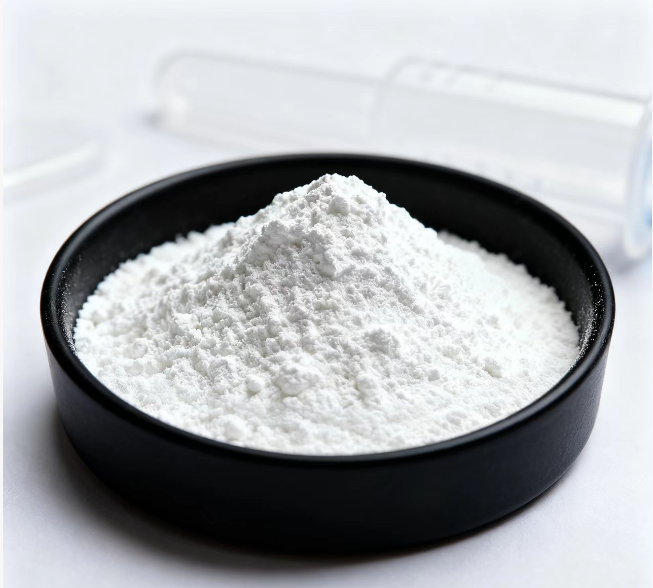
What is Hydroxyapatite (HAP) ?Hydroxyapatite (abbreviated as HA or HAP) is a calcium‑phosphate salt with the chemical formula \(\boldsymbol{Ca_{10}(PO_{4})_{6}(OH)_{2}}\), belonging to the apatite‑group minerals. As the primary inorganic component of bones and teeth in vertebrates, it accounts for approximately 69% of human bone weight and 96% of human enamel weight, and thus exhibits excellent biocompatibility and bioactivity.As an important biomaterial, hydroxyapatite is widely used in medical fields including bone‑defect repair, artificial joint coatings and tooth remineralization. In addition, thanks to its unique crystal structure and ion‑exchange capacity, it shows great application potential in environmental remediation (e.g. heavy‑metal adsorption), catalysis, sensors and new‑type fire‑resistant materials such as fire‑resistant paper.
Key Parameters
Applications
Orthopedics / Trauma Repair Field
1.Bone defect filling materials; 2. Coatings for metal implants; 3. Composite fillers for bone cement; 4. Artificial bone scaffolds; 5. Spinal fusion, maxillofacial surgery and craniomaxillofacial reconstruction.
Stomatology Field
1.Implant coatings; 2. Alveolar ridge augmentation, bone powder; 3. Periodontal repair materials; 4. Fluoride‑free toothpaste, children’s toothpaste, tooth powder; 5. Mouthwash, desensitizing gel.
Daily‑use Cosmetics FieldDaily‑use Cosmetics Field
1.Skin barrier repair; 2. Oil‑control & matte‑finish powder; 3. Skin‑brightening adjuvant, adsorption of surface sebum and impurities; 4. Auxiliary agent for sunscreen system, powder filler.
Drug Delivery & Biomedical Engineering
1.Targeted‑drug carriers; 2. Immobilization carriers for protein, enzyme and growth factors; sustained‑release growth‑factor carriers for tissue engineering; 3. Scaffold carriers for bone‑regeneration growth factors (BMP‑2 and other composite sustained‑release agents); 4. Biodegradable medical dressings and wound‑repair materials.
Nutrition‑Food‑Feed Industry
1. Calcium‑supplement nutritional additives: calcium‑source raw materials for food and dietary supplements (bio‑available calcium phosphate); 2. Feed additives: calcium‑phosphorus supplement for livestock, poultry and aquatic feed.
Industrial, Environmental‑protection & Water‑treatment Applications
1.Heavy‑metal adsorbent; 2. Catalyst and catalyst carrier; 3. Chromatography packing material; 4. Fluorescent and laser materials; 5. Anti‑corrosion coatings & high‑temperature‑resistant ceramics.
Cutting‑edge Scientific Research & Additive Manufacturing (3D Printing)
1. 3D‑printed porous artificial‑bone scaffolds; 2. Bone‑cartilage composite tissue‑engineering scaffolds; 3. Biomimetic mineralization & stem‑cell culture‑substrate materials; 4. Antibacterial‑modified hydroxyapatite (zinc‑doped, silver‑doped, copper‑doped).
Product FAQ
What grades are available for hydroxyapatite?
Food‑grade, industrial‑grade, pharmaceutical‑grade and cosmetic‑grade.
What morphologies does hydroxyapatite have?
Spherical; quasi‑spherical; acicular; short‑rod shaped.
What particle‑size grades are available for hydroxyapatite?
Nanometer grade, micrometer grade and millimeter grade.
Is hydroxyapatite listed in the cosmetic ingredient inventory? Are there any limits on dosage?
It is included in the *Inventory of Existing Cosmetic Ingredients (2021 Version)*. There is no mandatory upper limit for general skin‑care formulas, and the actual dosage should be adjusted according to processing technology. For oral‑care applications, EU SCCS allows a maximum concentration of 29.5% for nano‑HAp.