
ergothioneine approved new food ingredient China
After years of waiting, L-ergothioneine finally has a defined status in China's food supply. What matters more than the word "approved" is the fine print — which foods it can go into, how much, and who shouldn't take it.
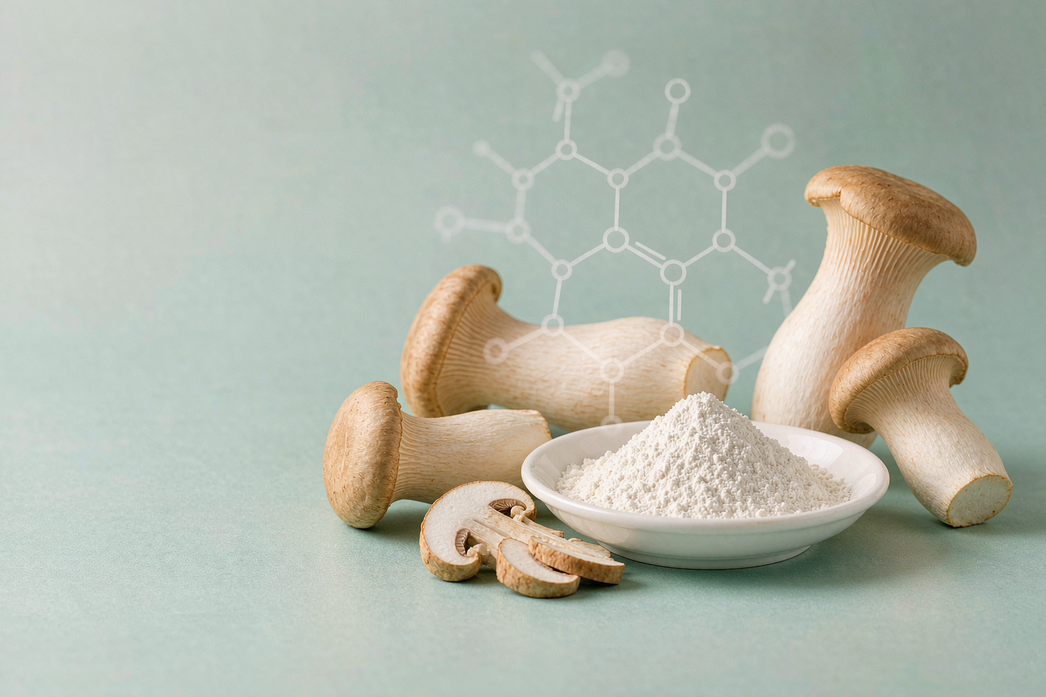
On November 23, China's National Health Commission posted Announcement No. 7 of 2026, formally approving L-ergothioneine as a new food ingredient. The announcement is dated November 12; the website published it about ten days later.
When you work in raw materials, news like this doesn't get a celebration first. It gets a flip through the appendices looking for numbers. Because "approved" is only the beginning — what decides whether you can actually use the stuff is the few lines that follow: how much, in what, and who can't have it.
One note on terminology before anything else. People in this industry still say "new resource food" out of habit. That's the old name. The current official term is "new food ingredient," and that's what you want in your documents and filings. No reason to trip over a wording detail.
What Exactly Got Approved
The subject is L-ergothioneine, CAS 497-30-3, molecular formula C9H15N3O2S. It's an amino acid derivative that occurs naturally in edible mushrooms.
The official interpretation spells out seven approved production routes. The first six use microbial fermentation — strains include Rhodotorula toruloides SH293 and several strains of Escherichia coli. The seventh is chemical synthesis, starting from materials like trimethylhistidine and cysteine.
Why make a point of the production route? Because approvals for new food ingredients are granted per route and per strain, not for a generic name on a label. Whether the batch in your hands was made by a route listed in the announcement is the first compliance checkpoint.
Purity has to be at least 99.0% on a dry basis. That's not a soft threshold, so check the measured value on the COA when you buy.
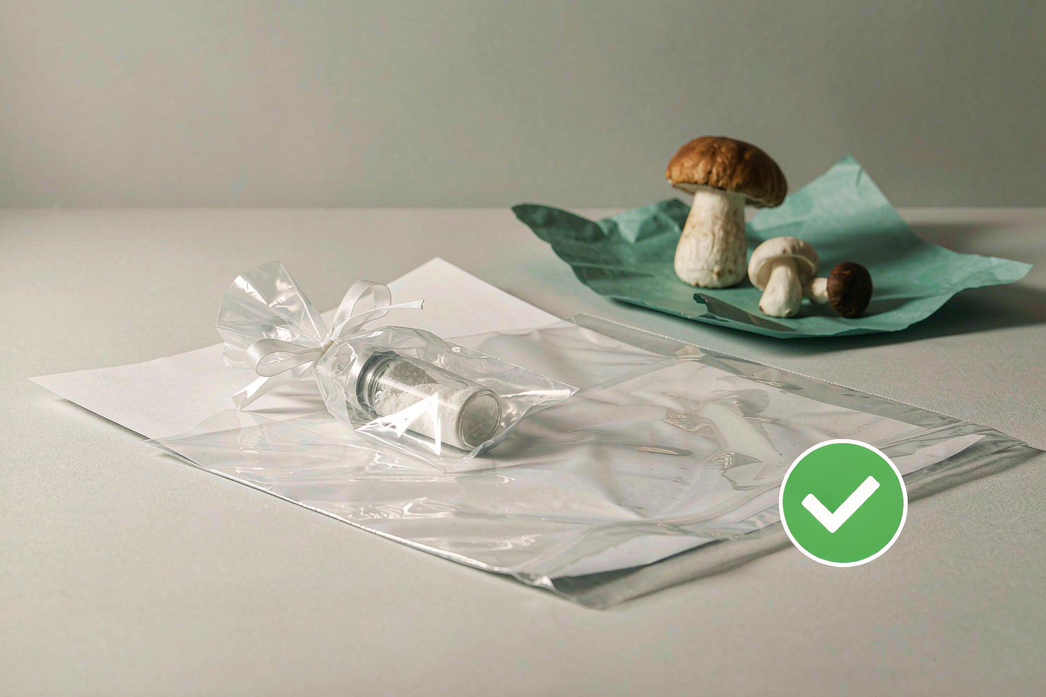
Ergothioneine raw material and the key points of the announcement
The Two Numbers to Watch
First, the recommended daily intake: no more than 20 mg per day, calculated on the pure ingredient.
Mind the phrase "on the pure ingredient." If your material is 99% pure, 20 mg of pure ingredient works out to roughly 20.2 mg of actual material. If purity is lower, the math changes. Get that conversion wrong and the intake limit on your label is wrong with it.
Second, which foods can carry it, and at what level. The announcement sets maximum use levels. Here's the table, taken from the official appendix:
Food category | Maximum use level |
|---|---|
Formulated milk, flavored fermented milk | 20 mg/kg |
Milk powder, formulated milk powder | Calculated from the mass of the reconstituted liquid |
Cheese, processed cheese, cheese products, condensed milk | Calculated by the multiple of the raw-milk input |
Liquid beverages, 50 mL pack size | 200 mg/kg |
Liquid beverages, 51–500 mL pack size | 20 mg/kg |
Solid beverages | Calculated from the volume of the reconstituted liquid |
Baked goods | 200 mg/kg |
Cocoa products, chocolate and chocolate products (including compound chocolate) | 400 mg/kg |
Confectionery | 400 mg/kg |
The two beverage tiers are easy to misread. Small 50 mL packs get 200 mg/kg; 51 to 500 mL drops to 20 mg/kg. The difference is the pack size. Settle the pack format first, then work backward to the dosage — reverse that order and you'll overshoot the limit.
Solid beverages and milk powder say "calculated after reconstitution," which means the cup the consumer actually drinks, not the powder in the packet. This is the one people most often miss. Remember to multiply by the reconstitution factor.
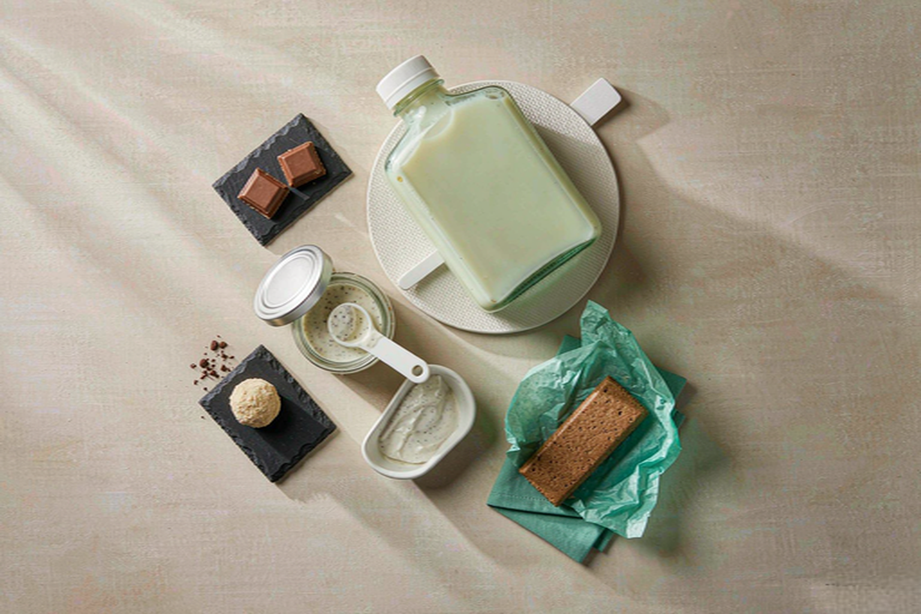
Approved food application categories
Three Traps Worth Calling Out
First, the unsuitable-groups statement is not optional. The announcement is explicit: infants, pregnant women, and breastfeeding women should not consume it, and both the unsuitable groups and the intake limit have to appear on the label and in the instructions. That's a requirement, not a suggestion.
Second, don't turn research findings into product claims. There's been no shortage of studies on ergothioneine for antioxidant and cell-protection effects these past couple of years, but that's the research side of things. Under current rules, "functional food" isn't a legal category in China. Outside of special foods, everything is managed as ordinary food and can't claim any function or therapeutic effect. Someone has to hold the line when the marketing copy gets written.
Third, safety indicators and test methods need to follow the announcement. The referenced methods sit on the China National Center for Food Safety Risk Assessment website, in the "three new foods" section. Use those for quality control.
Why This Took So Long
A Xinhua report not long ago put it plainly: China is the largest producer of ergothioneine in the world, but the biggest user of it as a food ingredient is the United States.
Over the past two or three years, synthetic biology brought domestic capacity up fast. The material was there — it just couldn't be legally used in food at home. Oral products had to go through cross-border e-commerce, shipped in from Japan or the US. Capacity in hand, market outside the door. That awkward stretch lasted a while.
Back on April 22 this year, the China National Center for Food Safety Risk Assessment had already published a notice that L-ergothioneine and three other ingredients passed technical review and were open for public comment. This final approval closes that loop.
The US manages it under GRAS, and the EU has approved it as a novel food. Clearing the domestic gate is a real gain for brand owners, whether they're selling at home or exporting.
Plain Advice for Brand Owners
If you're planning to launch something with it, work through it in this order.
Start by confirming the production route on your material is among those listed, the strain matches, and purity reaches 99%. That's where compliance starts. If it fails here, nothing downstream matters.
Then work back from pack size and food category to the dosage, hold the 20 mg/day ceiling, and handle the reconstitution conversion where it applies.
Then get the label right. Unsuitable groups, intake limit — put the words on there.
Last, keep the claims in check. Ordinary food is ordinary food. Don't say "functional"; saying it is the risk.

The Short Version
There's no question about this ingredient's value, and the market has been hot on it for a while. But hot is one thing; putting it in a product comes back to the plain basics — a compliant route, a dose calculated correctly, a clean label.
On our side as a raw-material supplier, there are only a few things we can do: be clear about the route and batch records, hand over the COA and MSDS batch by batch, and let you test a sample before talking volume. The policy just landed and everybody is feeling out their first products. At a moment like this, whether your documents are complete and whether you answer fast is a visible difference.
What the material is, we make clear from the first email.
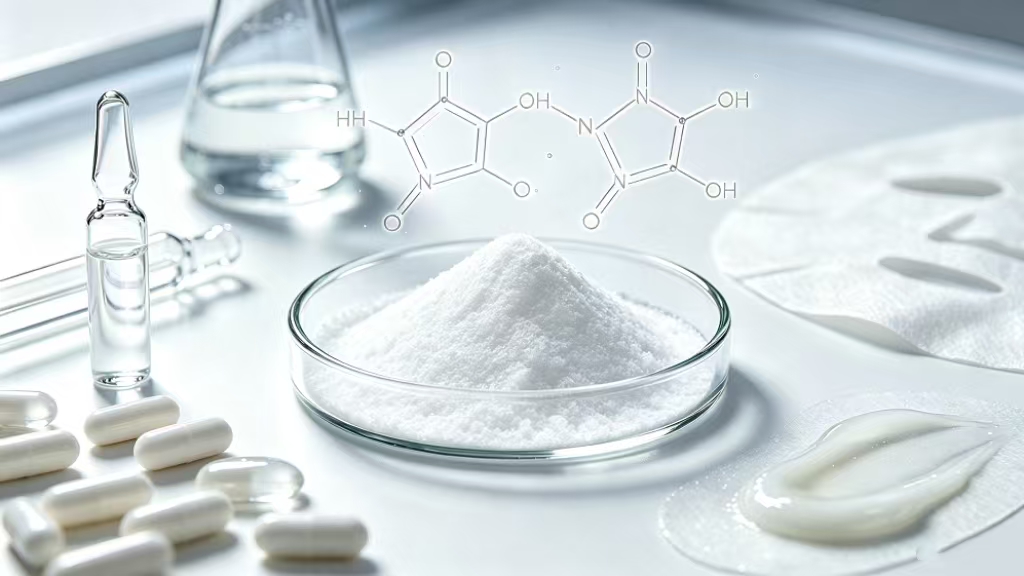
View the product: Ergothioneine
Related reading: Cosmetic Ingredient Compliance: A Guide to EU CosIng and China's IECIC | Which Functional Ingredients Go into Anti-Aging and Whitening Formulations?
Sources
National Health Commission. Announcement on 22 "Three New Foods" Including Bifidobacterium animalis subsp. lactis CP-9 (Announcement No. 7 of 2026), published 2026-11-23.
Department of Food Safety Standards and Surveillance Assessment, NHC. Interpretation of the above announcement.
Xinhua News Agency. Food Functionalization Is Accelerating, and the Industry Needs to Resolve a Dilemma.
China National Center for Food Safety Risk Assessment. Administrative licensing announcements and reference test methods under the "three new foods" category.